Why Advocacy?
CSW engages in advocacy as it has proven to be an effective method for addressing international violations of freedom of religion or belief (FoRB). Through advocacy work we are also able to encourage the development of the sort of societies and communities that allow for FoRB to really flourish.
CSW’s advocacy work focuses on the protection and enjoyment of FoRB for all people.
"The work of CSW is rooted in the UN Charter and the Universal Declaration of Human Rights. They support the right of all to freedom of religion or belief."
H.E Ambassador Martin Shearman from the UK Mission to the UN
What our advocacy looks like
We document FoRB violations in various countries and regions, and work for lasting change in these contexts.
We make urgent appeals on behalf of individuals facing severe FoRB violations, such as imprisonment, harassment, torture, death penalty or execution on grounds of religion or belief.
We engage in the global discussion on FoRB and seek to influence how FoRB-related issues are communicated by the media.
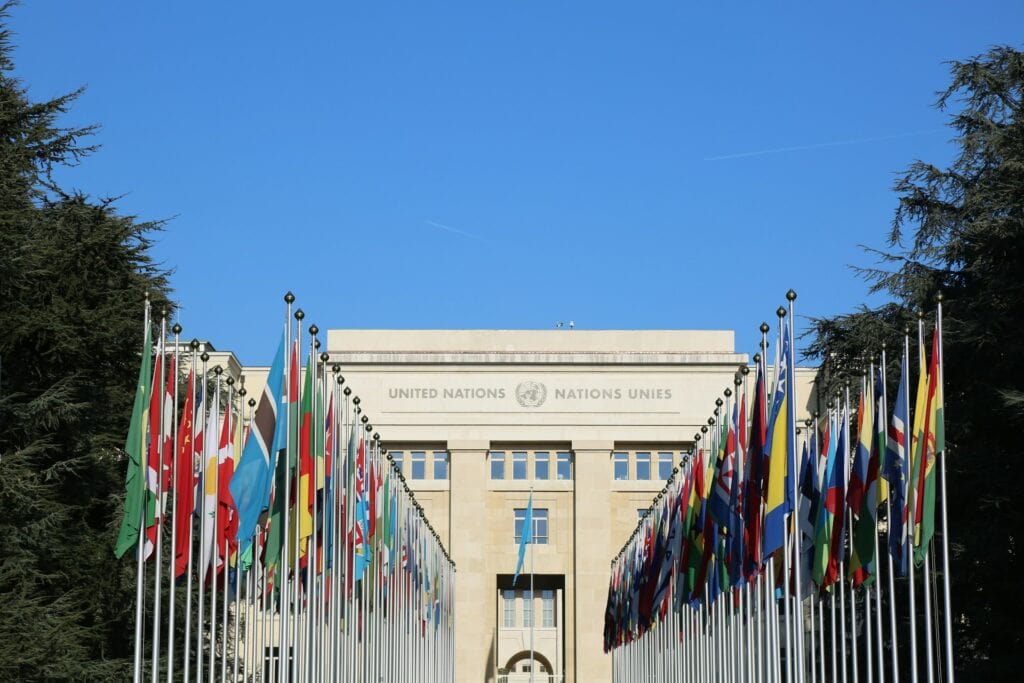
We seek to influence policy on FoRB-related issues and inform opinion and debate amongst policy makers and other key stakeholders.
Our advocacy values and principles
In our advocacy, we aim to be:
Accuracy
We base our claims on accurate first hand information, cross-checked with other sources, when possible.
Consistent
We aim to follow a given situation or case until we see the change we are advocating for. We do this even when international media and public attention lose interest in the case.
Attentive
This could be summarised in the “do no harm” principle: it is of utmost importance to us to ensure the integrity and security of the individuals on whose behalf we act. We ensure their approval prior to taking any action. We often need to act discreetly.
Sensitive
We take into account the complex situations in which we act, paying attention to local customs, societal relations and gender roles, the political and religious environment, and so on. We do not sensationalise our stories.
Complementary
We do not want to duplicate the work of others, but we believe in bringing a complementary contribution to existing efforts promoting freedom of religion or belief.
Cooperative
We aim to form alliances when possible, as there are occasions when acting together can make us stronger and more influential. We cooperate with a wide range of partners, including religious communities, human rights organisations and networks, and religious freedom agencies.
Empowering
While our motto is ‘voice for the voiceless’, we engage in training and capacity-building so that individuals and groups can speak up for themselves or on behalf of others.
For whom?
CSW seeks to promote freedom of religion or belief which is upheld in article 18 of the Universal Declaration of Human Rights.
While we focus on issues faced by Christians of all denominations and backgrounds, we believe that it is fundamental from a moral, biblical and human rights perspective to promote freedom of religion or belief, including the right not to believe, of all individuals, regardless of their religious or philosophical conviction.
Where Christians face intolerance, there are often patterns of systemic, wider-scale discrimination on grounds of religion or belief affecting other groups and individuals in a society as well. We cannot address one part of the problem only; instead, we aim to be as comprehensive as possible in the given remit of our work.
To whom?
Our advocacy targets consist of two main categories: those who violate freedom of religion or belief, and those who can use their leverage to influence them.
01 Governments and state authorities
Including the United Kingdom, United States, EU member states, and several Latin American states, asking them to put pressure on the worst FoRB violators. Increasingly, CSW also seeks to directly address governments responsible for severe FoRB violations. We engage mainly with ministers, diplomats and civil servants.
02 International and regional organisations
Including the United Nations (UN), European Union (EU), Organization for Security and Co-operation in Europe (OSCE), African Union (AU) and The Association of Southeast Asian Nations (ASEAN).
03 Elected representatives
Such as MPs and national parliamentarians, MEPs, American Senators and members of Congress.
04 Public opinion
Including media and supporters, churches and religious communities, NGOs and think tanks, academics and researchers.
05 Non-State actors
Such as businesses, armed or other groups whose activities impinge on the right to FoRB.
What we bring
CSW is one of the few organisations which offer the following combination of competence and expertise:
- We bring both a faith-based and human rights approach to our work.
- We promote freedom of religion or belief for all.
- Our advocacy is tailored towards a wide range of different audiences.
- Our research and documentation is meticulous, consistent and accurate.
- And we have access to first-hand information, without challenging the security and integrity of our sources.
See some recent results of CSW’s advocacy work
Given our unique position to influence a variety of situations CSW has seen a number of short and longer term successes over recent years. We will continue to work hard, and to innovate in our advocacy work to ensure that we see even greater success in years to come.
 English (UK)
  Español de México
  简体中文
简体中文