
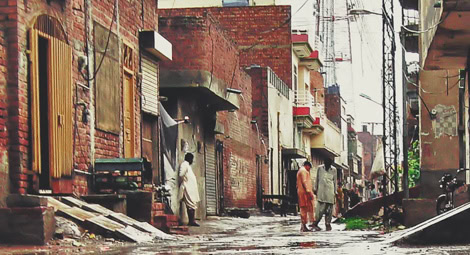
Pakistan’s government has succumbed to seven out of ten demands made by Mumtaz Qadri supporters, who have been protesting outside government buildings in Islamabad, including demands not to amend the country’s blasphemy laws.
Mumtaz Qadri was executed on 29 February. On 4 January 2011 he shot dead the former Governor of Punjab Province, Salman Taseer, an outspoken critic of the blasphemy laws who campaigned on behalf of Asiya Bibi, a Pakistani Christian woman currently on death row following a blasphemy conviction.
His supporters have staged a sit-in in the D-Chowk Red Zone, a high security area where Parliament House and key government buildings are located in Islamabad, violating a district magistrate’s notice to disperse by 30 March. Since the protests, which began on 27 March, there has been a media blackout in Islamabad, as well as the suspension of mobile phone networks and bus services.
On 30 March, and in exchange for an assurance that protesters would disperse, government officials agreed to seven of their ten demands, including the release of those arrested during the sit-in, that no amendments be made to Article 295 A, B and C of Pakistan’s blasphemy laws; and to show no leniency to anyone convicted of in blasphemy. Civil society in Pakistan is shocked by the government’s willingness to bow to the pressure applied by the protesters, as this is seen as legitimising the influence they wield.
Amjad Nazeer, Director of Institute of Development Research and Corresponding Capabilities (IDRAC), told Christian Solidarity Worldwide (CSW): “Every single demand was and is lethal, immediately and in the longer term, to the diversity and plurality of the country. Such demands might eventually end up having a theocratic state of Pakistan”.
CSW’s Chief Executive Mervyn Thomas said, “After the tragedy of the Lahore bomb attack the government of Pakistan should be resolute in protecting religious minorities. These concessions highlight the government’s inability to withstand pressure from hardliners and raises questions about its commitment to guarantee the rights of all Pakistani citizens, including religious minorities. Religious minorities are already vulnerable and subject to multiple threats, from the use and misuse of blasphemy laws to the promotion of hate speech and discrimination towards them. This regressive step is a betrayal to victims of the recent bomb blast and undermines the commitment by Prime Minister Nawaz Sharif to eliminate the extremist mindset.”

 English (UK)
  Español de México
  简体中文
简体中文