
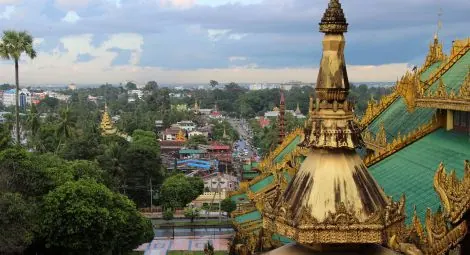

Myanmar’s existing humanitarian and human rights crisis has been intensified by the impact of the 7.7-magnitude earthquake that struck near Mandalay on 28 March, and its aftershocks.
As the epicentre of the quake, Myanmar has faced the most serious consequences of the disaster, which has had an immense effect on southeast Asia. The United Nations (UN) has reported an increase of over 2,000 in the official death toll as of 31 March, with over 3,400 individuals injured and hundreds still missing in Mandalay, Sagaing, Nay Pyi Taw, Bago, Magway, Shan, and other impacted regions in Myanmar. The U.S. Geological Survey (USGS) indicates that the actual death toll could surpass 10,000.
The disaster has intensified existing problems of religious discrimination and repression in Myanmar. Religious and ethnic minorities, who were already systematically marginalised for an extended period, are currently experiencing even more significant challenges.
For decades, the authorities in Myanmar have implemented legal and administrative barriers that severely restrict religious freedom and make it nearly impossible for specific religious groups to practice their faith openly and safely, including restrictions on building or implementing necessary maintenance of their places of worship, making them extremely vulnerable to the earthquake.
Muslim communities, that have historically experienced marginalisation and repression, are particularly affected. On 31 March DVB reported that more than 200 Muslims had died after three mosques out of five in Sagaing were completely destroyed, and that there were difficulties in burying the dead according to religious rites. In an interview with DVB, a Muslim resident of Sagaing said: “We have to send the bodies from Sagaing to Mandalay because the cemetery where the Muslims are buried is a war zone, and we simply cannot access it. There are immense difficulties in passing through.” More than 50 mosques have suffered considerable damage in Myanmar, with some collapsing during Friday prayers, resulting in many fatalities among worshippers.
Christian communities have faced similar, significant challenges. Important locations like St. Michael’s Catholic Parish in Mandalay and St. Joseph’s Cathedral in Taunggyi have experienced substantial damage in the earthquake. Furthermore, reports from the military’s State Administrative Council indicate that more than 600 Buddhist monasteries and nearly 300 pagodas have been impacted, and there have been initial reports of casualties among monks attending a religious exam in a temple. The regime’s selective reporting on the disaster, which has notably omitted the destruction of mosques, has raised concerns about how Muslim communities are excluded from national narratives and relief efforts.
Amid the deadly earthquake, the military junta in Myanmar persists in executing airstrikes in civilian regions, including in ethnic and religious minority areas such as Kachin, Karen, and other areas, such as Sagaing, close to the earthquake’s epicenter – exacerbating the ongoing crisis. The National Unity Government (NUG) has formally requested a two-week ceasefire to facilitate the delivery of humanitarian aid; however, this appeal has been ignored by the military.
Tom Andrews, the UN Special Rapporteur on Human Rights in Myanmar, has denounced these actions, asserting that aid workers must not be detained and that there should be no barriers to delivering assistance to those in need. His remarks highlight the junta’s strategy of weaponising aid, a tactic that has been historically employed to suppress religious and ethnic groups beyond its influence.
This crisis calls for an urgent, comprehensive response, as Myanmar is dealing with the immediate impacts of the earthquake with restricted access for both local and international humanitarian agencies while enduring the consequences of an ongoing conflict and humanitarian crisis since the 2021 military coup.
CSW’s Founder President Mervyn Thomas said: ‘CSW extends our heartfelt condolences to all who have lost loved ones in this terrible tragedy. The international community must demand that Myanmar’s military State Administrative Council (SAC) cease its airstrikes against civilians immediately. It is vital to support relief and recovery efforts in Myanmar and to ensure that humanitarian assistance reaches all affected communities equitably. No effort must be spared to ensure that the rights and dignity of every community, regardless of faith, are upheld during this critical time, and the international community must also press the military regime to ensure that the systemic inequities that leave minority communities especially vulnerable are addressed.’

 English (UK)
  Español de México
  简体中文
简体中文