On 23 September the International Criminal Court (ICC) found Mahamat Said Abdel Kani, a leader within the Seleka alliance, guilty ‘beyond any reasonable doubt’ of crimes against humanity committed in the Central African Republic (CAR) in 2013. He is the first Seleka leader to be brought to justice by an international tribunal.
Mr Said was charged with eight counts of war crimes and crimes against humanity and was convicted of crimes against humanity, including torture, persecution, imprisonment, and other inhumane acts. The charges relate to his role overseeing the Office Central de Répression du Banditisme (Central Office for the Repression of Banditry, OCRB), a detention facility used by the Seleka to hold people suspected of supporting François Bozizé, belonging to certain ethnic or religious groups, or working for the national army or presidential guard.
Mr Said reported directly to senior Seleka leader Noureddine Adam and was convicted of persecution as a crime against humanity on the grounds of religion, ethnicity or political belief. Several Christian witnesses testified that they had been threatened and ordered to stop praying while detained at the OCRB.
The ICC ruled by a majority that the nature of the conflict between the Seleka and other groups in the CAR did not reach the threshold required for war crimes to be applied. Mr Said was therefore acquitted of the war crimes charges.
CSW’s CEO Scot Bower said: ‘CSW welcomes the first conviction of a leader of the Seleka alliance, albeit 13 years after the offences took place. The judgement is a testament to those who have worked alongside the survivors of these crimes to secure justice. While Mr Said’s conviction is extremely significant, we remain aware that many other victims and survivors are still awaiting justice while crimes continue to go unanswered and perpetrators remain beyond the reach of justice.’
In March 2013 a coup led by the Seleka rebel alliance removed François Bozizé’s government and precipitated a significant deterioration in the country’s human rights and humanitarian situation. Although the CAR had no previous history of sectarian violence, Seleka elements increasingly targeted the Christian population. By December 2013 the violence had intensified significantly, with the country’s minority Muslim community coming under attack from militias known as anti-Balaka that identified as Christian, but eventually also targeted members of the Christian community.
Mr Said’s case follows the 2025 convictions of Alfred Yekatom, a former anti-Balaka commander, and Patrice-Edouard Ngaïssona, a senior anti-Balaka leader, of war crimes and crimes against humanity. Mr Yekatom was sentenced to 15 years’ imprisonment, and Mr Ngaïssona to 12 years. Their convictions included the war crimes of murder, torture and cruel treatment, as well as directing an attack against a building dedicated to religion in connection with an attack on a mosque.
Local sources informed CSW that justice is vital to peace and reconciliation, but added that these trials had taken too long. The current conflict in the CAR is no longer primarily between the Seleka and anti-Balaka, however civilians remain vulnerable to severe violations committed by other actors, including Russian mercenaries operating alongside the national army.
On 29 June 2026 members of the former Seleka alliance attacked Am Dafock, a town on the Sudanese border. The attackers included the Popular Front for the Rebirth of CAR (FPRC), led by Noureddine Adam, to whom Mr Said reported and who is wanted by the ICC for his role in atrocity crimes, and the Democratic Movement for the Rallying of the Central African People (MDRPC). Armed elements from across the border in Sudan, an area currently controlled by the Rapid Support Forces (RSF), reportedly joined these groups. The attack caused an acute humanitarian crisis, prompting civilians to seek refuge at the base of the UN Peacekeeping Mission in the CAR (MINUSCA).
Also in June, gunmen killed Father Crepin Martial Monga, a priest of the Catholic Parish of Bangassou, near his home in Zemio. Father Monga had led a local peace and reconciliation committee working to address recent conflicts in the town. Throughout 2025, Zemio experienced persistent tensions and clashes, including targeted attacks by the Azande Ani Kpi Gbe (AAKG), or Azande Militia, against members of the Fulani community. The violence displaced civilians and resulted in the deaths of non-combatants and UN peacekeepers.
Scot Bower added: ‘We continue to call on the government of the CAR, with the support of the international community, to address impunity and ensure that survivors of vere human rights violations have prompt access to justice.’
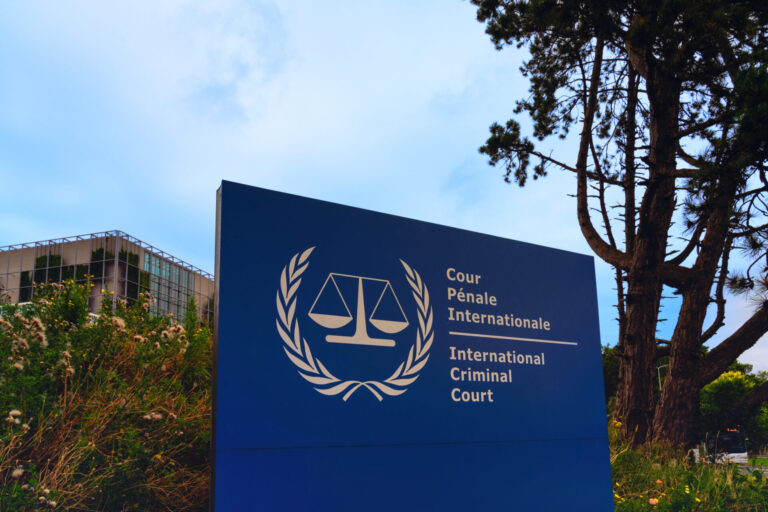
Featured Image: ‘International Criminal Court at The Hague‘ by Tony Webster is licensed under CC-BY-2.0.
 English (UK)
  Español de México
  简体中文
简体中文 