
Many of the unjust imprisonment cases we work on are relatively straightforward.
When someone is charged with blasphemy or apostasy, a clear link can be made to a violation of freedom of religion or belief. Likewise, when individuals are imprisoned, deprived of property, or subjected to other penalties without being charged with any crime, there is little doubt that an injustice has occurred.
But what happens when someone is accused of a crime that would be considered serious anywhere in the world? Terrorism, sexual assault and child abduction are acts that should all be met with serious legal consequences. Yet in some countries, governments sometimes falsify such charges in an effort to whip up public outrage, to remove sympathy for the targeted individual, and to obscure that the real motive is, in fact, connected to human rights such as freedom of religion or belief.
How does CSW tell whether such serious accusations are credible? Why, for example, did we decide to take on the case of Pastor Efrén Vílchez López, a Protestant pastor accused of sexual assault in Nicaragua; of Professor Solomon Tarfa, accused of child abduction in connection to the Christian orphanage he founded in Kano State, Nigeria; or of Dr Nguyễn Đình Thắng, whom the Vietnamese government accused of running a terrorist organisation?
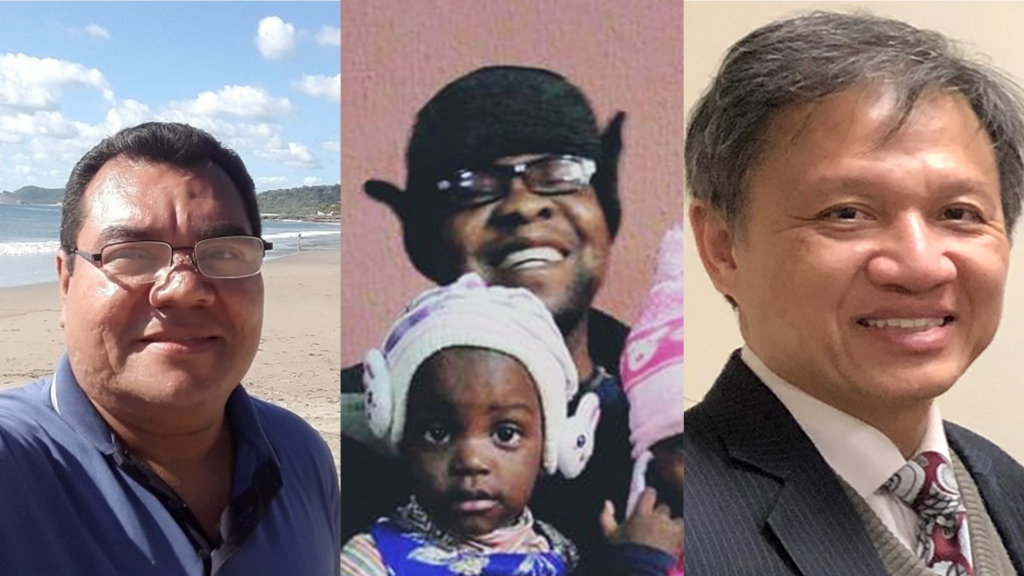
Sometimes, CSW is confident that an injustice has occurred because we personally know the individuals involved, or we have other direct experience that supports the person’s claim of innocence. In the case of Dr Thắng, CSW has worked with him and his organisation (Boat People SOS) for over 20 years. We have witnessed the impact of his human rights advocacy in Vietnam, and we have also seen how angry his work — exposing the unjust actions of Vietnamese officials — has made the government.
When Professor Tarfa was arrested and charged on Christmas Day in 2019, CSW already had a wealth of information showing he was a long-time target of the Kano State government; we had worked on a similar case involving the professor and his wife 17 years earlier. In 2002, CSW intervened to secure the release of both Tarfas from arbitrary pre-trial detention following an almost identical raid on the orphanage they ran. A high court subsequently ruled that the Du Merci Centre was duly registered and was conducting a legitimate endeavour. The court also ordered the return of children who had been removed from the orphanage, and ordered that compensation should be paid.
Often, in cases involving false charges, there is a clear absence of due process or an arbitrary changing of the legal goalposts — making it difficult, or even impossible, for the accused to defend themselves.
In Nicaragua, Pastor Efrén was prevented from presenting any evidence at his trial — including CCTV footage that proved his alibi. The charges against him were changed without explanation over the course of the legal procedure. In addition, his accuser was known to work for the Nicaraguan security and had been directly involved in previous government harassment of the pastor.
As for the Kano State government’s case against Professor Tarfa, the security officials who arrested him and searched the orphanage did so without a warrant. They initially accused him of not having a license to operate an orphanage. However, once his wife produced documentation proving the orphanage was in fact registered to operate, the charges were changed to criminal abduction of minors.
In most of these cases, the government has a clear motive for targeting the individual in question.
Pastor Efrén has a history of speaking out about injustices committed by the authoritarian government of co-Presidents Daniel Ortega and Rosario Murillo. During the 2018 demonstrations, the pastor published statements condemning the use of violence against protesters. In 2019, after he verbally confronted police officers who routinely surrounded his home, he was severely beaten, resulting in fractures to his hand. His arrest came after he successfully organised a large-scale religious event, bringing together pastors from across denominations and the country.
And in the case of Dr Thắng – a refugee, human rights advocate, NGO leader, and mentor to hundreds of Vietnamese people around the world – the authorities failed to provide even a shred of evidence capable of substantiating their accusations. In the absence of any credible evidence, the conclusion is unavoidable: Dr Thắng is being targeted for exposing Vietnam’s ongoing human rights violations, particularly those affecting religious and belief minorities.
Governments who routinely violate freedom of religion or belief and other human rights know that the simple existence of serious criminal accusations against individuals they wish to silence — even in the absence of evidence — can be enough to severely damage a reputation. They can leave the victim isolated, with friends and religious and civil society organisations distancing themselves out of fear of any stigma of association.
Such charges force CSW to tread with caution. We examine cases like these and others as thoroughly as possible to ensure there is no merit to the accusations. Years of experience have given the members of our advocacy team the tools they need to identify the markers of a trumped-up case.
With your support, we will continue working to ensure that such tactics, which can destroy lives, are unsuccessful.
 English (UK)
  Español de México
  简体中文
简体中文