
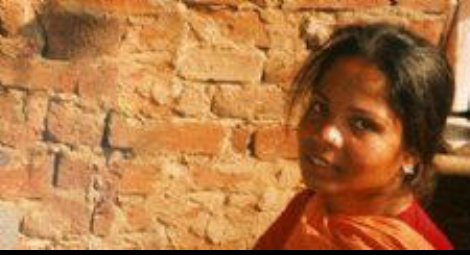

Last year, we shared the news that Asia Bibi had been released from prison in Pakistan after nine years on death row – an amazing answer to prayer – but that violent protests had subsequently swept the country. The issues and cases we work on are rarely straightforward, and our teams are used to navigating the complexities they present. We talked to two members of our advocacy team, Jane and Sarah,* to find out how they deal with bittersweet news.
Why can’t good news ever just be simple?
Jane: I think we all want things to be simple and have a successful outcome! We love stories with straightforward, happy endings. But the truth is we work with real people with real lives, and the ‘ending’ to their story can sometimes be far from straightforward. We have to honour the whole of their experience, of which CSW’s work in their lives may only be a small part.
So how do we do that?
Jane: In terms of our work it’s important to reflect the entire situation, with a focus on the perspectives of the people involved. With Vietnamese human rights lawyer Nguyen Van Dai for example, when we met him after he’d been released into exile in Germany it was obvious that he didn’t want freedom from prison to be the end of his story. He’s very passionate about human rights in Vietnam, especially freedom of religion, and he wants to see improvements there and carry on his work.
Sarah:We thank God that they’re safe and free to an extent, but if, as in the case of Nguyen Van Dai, they’re feeling like this isn’t the end of the story and this isn’t good news in its entirety, then we have a responsibility to reflect their experience.
What challenges might someone face after prison?
Jane:Sometimes, people are released from prison only to go into forced exile as a condition of their release, or they have to leave their country for their own safety. This can be quite difficult for people who’ve spent their entire lives defending human rights to suddenly be in another country without the resources that they used to rely on, where they don’t speak the language, and consequently can’t be as active doing the same kind of work they used to do. Even if they’re able to stay in their home country, it’s going to be difficult for them to rebuild their lives. It can be almost impossible to find a new job or home with fewer resources than they previously had, or with a criminal record that was simply the result of the state’s reprisal for their activism. Sometimes lingering effects of their ordeal such as post-traumatic stress can cause them to be rejected by their families.
How do you deal with not being able to help all the way through a situation?
Sarah: As a Christian organisation we bring a heavenly perspective to our work. We do the practical advocacy work we need to do, but we can also commit the entire situation to God and say, ‘Heavenly Father, be with us as we use our skills to help this person and be what they need at this point in time. Bring them through this experience and end the injustice, for them and for others like them who face similar discrimination, hostility and persecution.’ Ultimately our job is to advocate, pray and campaign on behalf of those who face injustice because of their religion or belief, and we are constantly guided by this mandate. When someone is released from prison, for example, it’s the end of that crisis but they still have the rest of their lives ahead of them.
How do we support people in the next chapter of their life?
Sarah: CSW often partners with other organisations that can provide the practical help people need while we advocate on their behalf. There’s an element of collaboration the whole way through, which is a huge privilege as we get a Kingdom view of other organisations coming together, each playing their unique role to help an individual or group of individuals. We can’t always talk about it publicly, however, due to security concerns. Once they’re situated safely and are being provided with the care and welfare they need, we keep praying for them as they start the next chapter of their lives.
Jane: Sometimes our prayer is the only encouragement they have. I remember one case of a pastor who was released but was under house arrest and CSW encouraged people to write to him. He told us, ‘At the time, I was completely isolated because I had this stigma of having been a prisoner, but these letters really kept me going because they showed me that even though people around me didn’t understand what I was doing, other people from across the world were encouraging me and writing to me.’ Even though his circumstances were in some senses better, his story was unfinished and he still needed our prayer and encouragement. Whatever the situation, I think that’s the most important thing to remember.
*Names changed for security reasons.
 English (UK)
  Español de México
  简体中文
简体中文