
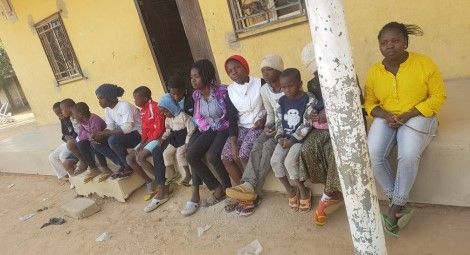

CSW has received disturbing reports indicating that 15 of the children who were seized during police raids on Du Merci orphanages in Kano and Kaduna states in December 2019, are to be transferred from the government-run Nasarawa Children’s Home in the Kano State capital to unknown rural locations.
According to credible local sources, the children aged between 4 and 10 will be transferred to an undisclosed area on 18 January, while those aged between 10 and 15 will also be sent to an unknown facility at an unknown date.
The impending relocations were preceded by the forcible expulsion from the government-run orphanage of an older Du Merci resident, who had remained voluntarily to care for these minors, and have increased concerns for their physical and psychological wellbeing.
Twenty-seven children were transferred to the government-run facility following raids on the Du Merci orphanages in Kano and Kaduna states by armed officers from the police force and the National Agency for the Prohibition of Trafficking in Persons (NAPTIP), that occurred on 25 and 31 December 2019, respectively.
Once in the Nasarawa Children’s Home, they were not permitted to leave the premises to attend school or church and have complained of being mistreated on account of their religious belief.
They have also experienced violence, including one of the older Du Merci residents being physically assaulted by security officers in the presence of a government official. Two children who suffer from chronic conditions that require constant treatment, a 15 year-old with sickle cell anaemia and an 18 year-old who developed high blood pressure due to trauma, were abandoned at a private hospital. Another remains hospitalised following a fire in the government orphanage in which he suffered first degree burns to the face, hands, body, and legs. Following the accident, other residents in the home falsely accused the Du Merci children of having started the fire deliberately.
In April 2020, Kano’s Commissioner for Women’s Affairs agreed to release eight of the older children into the custody of the Kano Chapter of the Christian Association of Nigeria (CAN). However, 16 minors remained in the government-run establishment.
CSW’s Founder President Mervyn Thomas said: “The treatment of these children is a shameful indictment of both state and federal authorities. The rights of these children continue to be violated comprehensively. They have been torn from their home and from the adults they consider to be their parents, and placed in a government orphanage where they have experienced discrimination, violence, a lack of education and separation from their religious community. Now they face being separated and moved yet again. CSW condemns the continuing lack of consideration for the trauma experienced by these young children by the authorities, who profess concern for their wellbeing while pursuing their own nefarious agenda. Since state authorities clearly do not have their best interests at heart, and no one in the state system is minded to care for them holistically, these children must be restored to their parents who love and cherish them as their own as a matter of urgency, before they endure further emotional damage.”
Notes to Editors:
1. The Du Merci Centres were founded by Professor Richard Solomon Musa Tarfa and his wife Mercy in 1996 to care for abandoned children in the Christian district of Sabon Gari in Kano state with the Kaduna state branch opening later.
2. The centres provided accommodation for these children, who view the Tarfas as their parents and who are educated and cared for until they can live successful independent lives.
3. The orphanages also accommodated young women who became pregnant out of wedlock, until they gave birth, reconciling them whenever possible with parents who had rejected them due to social stigma.


 English (UK)
  Español de México
  简体中文
简体中文