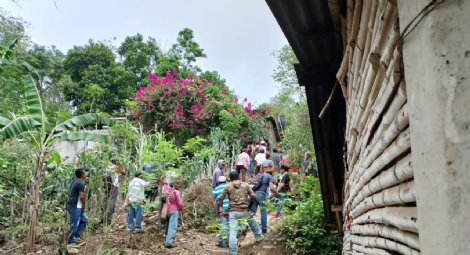
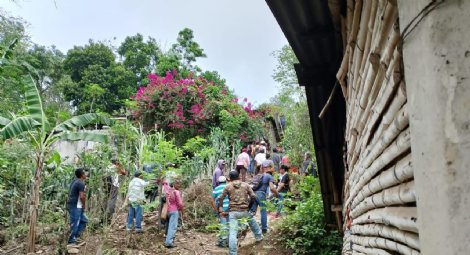
Fiftydays after theforced displacement on 26 April of more than 150BaptistProtestants inHidalgo State, Mexico,thegovernmenthas failed to take any action to ensure that those responsible for the displacement are held to account and the rights of the religious minority group are protected.
The forced displacement of the members of the Great CommissionFundamentalBaptistChurch, theculmination of a decade of violations of freedom or religion or belief(FoRB)in the neighbouring villages of Rancho Nuevo andCoamila, in the municipality ofHuejutla de Reyes, took place after village leaders, all Roman Catholics, cut off the electricity to the homes of the religious minority families,vandalised their church, and blocked access to some of their homes.The displaced group, which includes over 70children and infants, was first housed in a municipal building before being moved to a sports complex.
Sources told CSW that the municipal government, which holds primary responsibility to resolve the situation, has ‘washed its hands of the matter’ and has communicated to the religious minority group that if they wish to return to their homes, they should comply with thedemandsof the community leaders, which include penalties for declining to participate in Roman Catholic religious activities and would force the religious minority families to pay large fines, based on the date of their conversion to Protestantism – which have been increased to acumulative total of 750,000 MXN (approximately 40,000 USD).
The newly appointed Hidalgo State Director of Religious Affairs, Margarita Cabrera Román, hasreportedly returned to the state capital of Pachuca, claiming thatshe has done all she can.‘Theyrefuse to admit that there is a religious element andare claiming it is an internal conflict between neighbours. [The government officials]have told[the members of the community]to sort it out themselves,’ the source told CSW.
Another source told CSW that, followingcountry-wide elections in early June, the outgoing municipal government had no political interest in resolving the caseandaddressingthe associatedhuman rights violations.‘It might be necessary to wait until the next government takes office in October, but it will be the third term for the incoming municipal president,’ they said, highlighting that inthe last two decades, no municipal government inHuejutla de Reyes has ever taken action toaddressviolations ofFoRB, despite regularoccurrences, many severe,in communities in the municipality, all affecting Protestant Christians.
CSW’s Head of Advocacy Anna Lee Stangl said:‘Therefusalof government officials at the municipal and state levels in Hidalgototake action to address a mass forced displacement of these men,women and childrenon account of their religious beliefsclearly shows how deeply entrenched the culture of impunity around violations of freedom of religion or belief has become. CSW calls on the federal government to takeurgentmeasures, where the state andmunicipal government refuse to do so, to intervene in the case of those displaced from Rancho Nuevo andCoamila,and tohold those responsible fortheseegregious human rightsviolationsto account via the justice system. In the longer term, we call on the incomingpresidency of Claudia Sheinbaumtoprioritise andimplementpolices that willensure that the rights of all are protected in Mexico and that no one is deprived of their fundamental rights based ontheir religion or belief.’
Notes to Editors:
- Rancho Nuevo andCoamila are indigenous Nahuatl-speaking communities that are governed under Uses and Customs. The Mexican constitution guarantees FoRB and other human rights to all citizens. However, in practice FoRB violations are common among indigenous communities governed under the Law of Uses and Customs. This law protects the right of indigenous communities tomaintain their cultural and traditional methods of local governance with thecaveat that it must be applied in line with human rights guarantees in the Mexican constitution and in the international conventions to which Mexico is party. However, the Mexican government on both the federal and state levelsdoes little to ensure that these protections are upheld. As a result, in many communities a religious majority attempts to enforce religious uniformity with consequences ranging in severity for members of minorities who wish to practice a religion or belief of their choosing.
- Human rights violations linked to FoRB have been ongoing and severe in the neighbouring villages ofCoamila and Rancho Nuevo since 2015. Local authorities have repeatedlyattempted to force members of the religious minority toparticipate in Roman Catholic religious festivals, including through financial donations, lightingcandles and activelyparticipating in acts of worship. Despite detailed documentation of the case dating back to 2015, the municipal government continues to deny that the incidents in Rancho Nuevo andCoamila are linked to FoRB.
- Women from Rancho Nuevoparticipated in CSW research that was used forLet Her Be Heard, a groundbreaking report on how indigenous women in Mexico experience FoRB violations, published in April 2022.
- Hidalgo State governmentofficialshaverepeatedly and publicly denied the existence of any cases of religious intolerance in the state. CSW’s research has shown that it has one of the highest numbers of such cases in the country.



 English (UK)
  Español de México
  简体中文
简体中文