

The Senate of the Republic of Colombia held a hearing on 18 October 2023 to consider the inclusion of the religious sector in the 2011 Law of Victims (Law 1448 of 2011) as a specific category of the population that was collectively victimised in the decades long internal conflict that is still ongoing.
The initiative to amend the law, led by Senator Lorena Rios, the former coordinator of religious affairs at the Ministry of Interior of Colombia, was discussed by government officials and civil society representatives in the First Permanent Constitutional Commission of the Senate.
The Colombian government recognises that not only were individuals victimized in the context of the decades long internal conflict, but in some cases, specific categories of people, including journalists, human right defenders, members of indigenous and Afro-Colombian communities, and trade unionists were singled out and targeted in a unique way, experiencing a kind of collective suffering.
Numerous individuals representing the governmental and non-governmental sectors testified at the hearing in favour of amending the law to also include the religious sector, with many providing evidence of how illegal armed groups on both sides of the conflict systematically targeted religious leaders for assassination and imposed harsh restrictions on the exercise of freedom of religion or belief in areas where they maintained a significant presence.
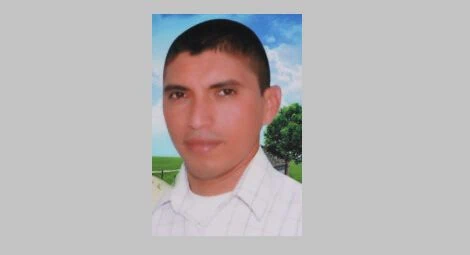
Witnesses included Gloria Muñoz who testified through tears about the September 2009 assassination of her 33-year-old husband Manuel Camacho. The Protestant pastor, who had disobeyed orders from the Revolutionary Armed Forces of Colombia (FARC) to cease sharing his faith in Choapal, Guaviare, was shot six times in the face by FARC guerrillas in front of his young children and left to die. Ms Muñoz and her children were subsequently forced to flee the area after coming under threats for having reported the crime.
The Colombian Single Registry of Victims has thus far identified 9,572,044 victims of the internal conflict. The quantity of cases of severe human rights violations experienced by religious leaders and others because of their religion or belief at the hands of illegal armed groups documented over a ten-year period from 2005-2015 by CSW and local partners indicates that the number of victims from within the religious sector over the entirety of the conflict may be in the tens of thousands.
In testimony shared at the hearing, CSW’s Head of Advocacy, Anna Lee Stangl shared the emblematic story of 27-year-old Protestant pastor Joel Cruz Garcia, who was assassinated along with another 63-year-old pastor by FARC guerillas in 2007, and called on the Colombian legislature to approve the initiative to amend the Law of Victims, saying, ‘It is very clear that, within an extremely complex and long running conflict with so many victims, the religious sector, especially religious leaders in areas where there was a significant presence of one or multiple armed groups, was a specific target that merits recognition in Law of Victims.’
Notes to Editors:
- Although a peace agreement was signed in 2016 between FARC leaders and the government, dissident FARC groups and the ELN remain active. Paramilitary groups have evolved as well and large scale armed criminal groups remain active in the conflict also.
- The Law of Victims provides for economic reparation to victims since 1985. Victims who experienced violations prior to 1985 only have right the symbolic reparations.

 English (UK)
  Español de México
  简体中文
简体中文