Introduction
1. CSW (Christian Solidarity Worldwide) and CSW-Nigeria seek to highlight the grave and continuing human rights violations committed by the government of Eritrea, and particularly violations of freedom of religion or belief (FoRB) and associated rights ahead of Eritrea’s upcoming Universal Periodic Review (UPR). In its 2016 report, the Commission of Inquiry on the situation of human rights in Eritrea (COIE) identified persecution on religious grounds as being among several crimes against humanity committed by Eritrean officials since 1991.
2. Tens of thousands of Eritrean citizens remain detained without charge or trial in life threatening conditions in more than 300 sites across the country. Among those incarcerated are prisoners of conscience, some of whom have been detained for decades due to peaceably expressed political views or religious beliefs. Conditions in these facilities are unsanitary and unsatisfactory; detention facilities can include shipping containers, underground cells, and the open air in the desert, and access to food, water and medical attention is insufficient and often withheld as punishment.
3. Eritrea noted recommendations during the third cycle of the UPR regarding the need to review domestic legal provisions concerning religious groups and the strengthening of national legislation concerning FoRB. However, it is yet to review the onerous, intrusive, restrictive and inconclusive registration process for religious communities that has been in place since May 2002, when the government ordered the closure of all but four religious communities pending registration, in a contravention of Eritrea’s ratified but unimplemented Constitution, which not only provides for FoRB, but also forbids discrimination on any grounds, including on the basis of religion. During the reporting period the government claimed to be drafting a new constitution; however no new document has emerged.
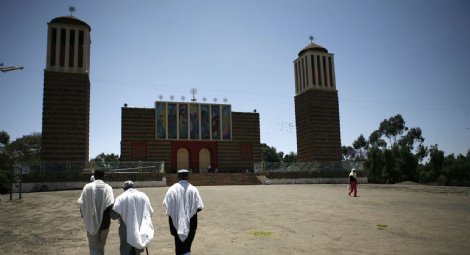
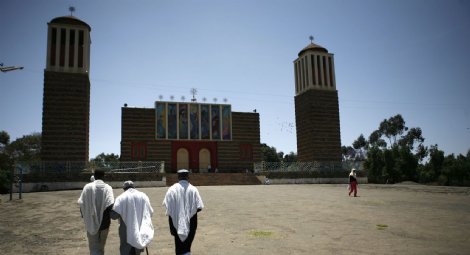
4. A campaign of arbitrary arrests and indefinite detentions targeting unregistered religious communities which began in 2002 continues to date. Moreover, even the four government-sanctioned religious groups which were exempted from the registration process – the Catholic, Evangelical Lutheran and Orthodox Christian denominations and Sunni Islam – experience similar harassment and arbitrary detention, indicating that a government obsessed with controlling every aspect of the lives of Eritrean citizens may have designed the policy to augment its control of this sector of society.
To read the submission in full, you can download the pdf here.


 English (UK)
  Español de México
  简体中文
简体中文