

Context
Legal framework
Under Article 36 of China’s constitution the state protects all religious activities unless they ‘disrupt public order, impair the health of citizens or interfere with the state’s education system’. This is limited to five religions overseen by seven state-sanctioned associations: Buddhism, Catholicism, Islam, Protestantism and Taoism.
Article 36 articulates legal rather than fundamental rights. Therefore, legislation can be enacted which violates the right to freedom of religion or belief (FoRB) as stipulated in the International Covenant on Civil and Political Rights (ICCPR), which China signed in 1998, but is yet to ratify. There is no independent judicial mechanism to review the constitutionality of legislation.
In 2022 Measures for the Administration of Internet Religious Information Services came into effect which prohibited content that induces minors to adopt religious belief. China expects every political and social organisation, including religious associations, to implement the law to advance ideological conformity, while people and groups beyond the country’s borders can be held accountable for undermining ‘progress or inciting ethnic separatism’.
In 2023 the Patriotic Education Law came into force, encouraging religious groups to ‘carry out education in patriotism’.
Measures for the Suppression of Illegal Social Organisations, formulated by the Ministry of Civil Affairs, came into force on 1 May 2025. Article 3 explicitly states that organisations without registration are illegal, though registered religious communities are still subject to severe FoRB restrictions.
On 1 July 2026 China brought into force the Law on Promoting Ethnic Unity and Progress to create common Chinese consciousness between 55 minority groups and the Han majority. The law codifies assimilation policies formulated over the past decade into national statute and marks a shift from management of diversity to active identity formation. Mandarin Chinese is now the primary language of instruction.
Chinese Communist Party (CCP)
In 2018 the first paragraph of Article 1 of the Chinese Constitution was amended from ‘The socialist system is the fundamental system of the People’s Republic of China’ to ‘Leadership by the Communist Party of China is the defining feature of socialism with Chinese characteristics’. Also amended was the third paragraph of Article 3: ‘All administrative, supervisory, adjudicatory, and procuratorial organs of the state shall be created by the people’s congresses, responsible to [the CCP], and subject to their oversight’.
The CCP Central Committee’s landmark 1982 Document No.19 states: ‘The basic policy the Party has adopted toward the religious question is that of respect for and protection of the freedom of religious belief. This is a long-term policy, one which must be continually carried out until that future time when religion will itself disappear.’ The document stresses that communists ‘must unremittingly propagate atheism’.
President Xi Jinping
President Xi called for the ‘Sinicisation’ of religion in 2016, requiring the adaptation of religious venues, clergy and education to ‘excellent traditional Chinese culture’ and socialist society. A resolution at the 19th National Congress of the CCP in 2018 underlined the Two Establishments: ‘For the Party to 1 – establish the status of Comrade Xi Jinping as the core of the Party’s Central Committee and of the whole Party, and 2 – to establish the guiding role of Xi Jinping Thought on Socialism with Chinese Characteristics for the New Era’.
President Xi secured a third term as General Secretary of the CCP at the 20th Party Congress, in October 2022, and in doing so became the most powerful leader of China since Mao. In March 2023 he won a constitutionally unprecedented third five-year term as President of the People’s Republic of China to consolidate his power and the momentum of Sinicisation.
Buddhism
Han-Buddhism
On 27 December 2025 the Buddhist Association of China (BAC) adopted the Measures for the Appointment of Principal Positions in Han Buddhist Religious Venues, which effectively exclude non-Han Buddhists from leadership. Han-Chinese temple abbots and monks are required to ‘persist in immersing the country with outstanding traditional Chinese culture’. The 5-Year Plan for the Sinicisation of Buddhism adopted in 2023 and running to 2027 tasks the BAC with forging a strong sense of community among Han, Theravada and Tibetan Buddhists in ethnic minority areas to ‘deepen the anti-secession struggle’.
Tibetan Buddhism
On 14 May 1995 Gedhun Choekyi Nyima, the 11th Panchen Lama, was forcibly disappeared days after he was announced by His Holiness the 14th Dalai Lama. Tasked with recognising the next Dalai Lama, the Panchen Lama is one of the most important figures in the Gelug school of Tibetan Buddhism. Later that year the CCP announced its own choice for Panchen Lama: the then-five-year-old Gyaincain Norbu. Widely rejected by most Tibetans, Norbu has been moulded into a vocal supporter of the CCP and its policies, urging monks and nuns to distance themselves from the exiled Dalai Lama, and repeatedly emphasising themes of national and ethnic unity,
On 2 July 2025 the Dalai Lama confirmed he would have a successor after his death, stating that only the trust that he founded could appoint his successor and ‘no-one else has any authority to interfere in this matter’.
China’s major hydropower development also threatens centuries-old cultural sites in Tibet; the Kamtok dam would cause displacement and irreparable damage to the Wonto and Yena monasteries in a Tibetan Autonomous Prefecture of Sichuan Province. Monks who protested the dam’s construction in 2024 have been unlawfully detained, including Gonpo Tsering, who was ‘subjected to severe physical abuse and torture while in custody’ and remains in critical condition as of August 2026.
Catholicism
Article 2 of the Constitution of the Bishop’s Conference of the Catholic Church in China (BCCC) states that is the ‘national leadership body for Catholic church affairs in China’. However, it operates differently than comparable conferences elsewhere; Article 1 ensures that the BCCC, together with the Chinese Patriotic Catholic Association (CPCA), is known as the ‘One Association and One Conference of the Chinese Catholic Church’.
Catholic life in China is overseen by the CPCA, a state-aligned body ensuring Catholic institutions comply with party policy; for example, a ‘sermon exchange activity’ in July 2026 in Shanxi Province was launched ‘to continue deepening the practise of Sinicisation of Catholicism in China and deepen the patriotism of religious clergy’. This ‘ideological consensus’ meant clergy ‘interpreted doctrines and rules based on local culture, promoting the integration of teachings with outstanding traditional Chinese culture’.
On 22 October 2024 the Vatican renewed the controversial Provisional Sino-Vatican Accord on the Appointment of Bishops. The deal, first signed in 2018 and never publicly disclosed, gives concessions to the CPCA in Beijing to recommend candidates for papal approval. The Holy See recognises self-governing Taiwan (Republic of China), with closer Sino-Vatican ties concerning for Taiwanese Catholics. Pope Leo XIV is following his predecessor’s approach after his visit to Hong Kong in September 2025.
‘Underground’ bishops had been active before this deal was signed, refusing to submit and join the CPCA. They are often forced to resign, subjected to surveillance, detained without due process or missing for decades. On 7 March 2025 Bishop Peter Shao Zhumin was arrested for celebrating Mass and the Public Security Bureau imposed a fine on his Sangjia Catholic Church in Wenzhou, the largest diocese in Zhejiang Province. Several priests in the region were charged with ‘illegal border crossings’ in 2024, and on 16 December 2025 the CPCA and BCCC adopted the Provisional Regulations on the Standardised Management of Exit-and-Entry Travel Documents for Catholic Clergy, requiring applications for foreign travel, post-travel reports and travel documents to be submitted to the central government for review.
In May 2022 Cardinal Joseph Zen of Hong Kong Diocese was arrested for failing to register the 612 Humanitarian Relief Fund, which aided protestors against the 2020 National Security Law. He was released on bail the same day and the Hong Kong Court of Appeal only heard his case in December 2025 in an unlawfully delayed trial, with the cardinal then aged 93. He was targeted as a long-time supporter of FoRB in Hong Kong.
Islam
The China Islamic Association refers to itself as a ‘patriotic religious organisation’ and heavily regulates Islamic activity across China. On 22 January 2026 new Measures for the Appointment of Principal Islamic Positions in Islamic Activity Venues were announced; Islamic leaders are instructed to ‘uphold the direction of Sinicisation of Islam’ in their mosque activities, preaching, and education and conduct ‘effective prevention of risks and hidden dangers in the ethnic field’.
Xinjiang Uyghur Autonomous Region (XUAR)
The CCP has a long history of oppression against Turkic Muslims in the XUAR in the name of counter-terrorism. 2017 saw the establishment of ‘political re-education’ camps in Xinjiang in which over one million people are believed to be detained. Most are Muslims of Uyghur ethnicity but also interned are Kazakhs, Kyrgyz, Tajiks and Uzbeks. In January 2026 UN experts warned that state-imposed forced labour in the XUAR and across other parts of China ‘may amount to forcible transfer and/or enslavement as a crime against humanity’. While some camps have been dismantled, the World Uyghur Congress reports that the government strategy throughout 2025 was to increase the intake of residential schools to obstruct children from receiving religious traditions through their parents and mosques.
Hui People Group
The majority Muslim Hui people reside primarily in Henan Province, the Ningxia Hui Autonomous Region (NHAR) and Yunnan Province and constitute China’s largest Islamic community. In 2023 Ma Yanhu, a Hui Muslim tour operator from Ningxia, was arrested on charges of facilitating ‘illegal border crossing’ for arranging Hajj pilgrimages. On 21 June 2024 Ma was sentenced to eight years imprisonment. His court appeal was rejected on 19 August 2024, and he remains in Wuzhong City Prison, Ningxia.
Protestantism
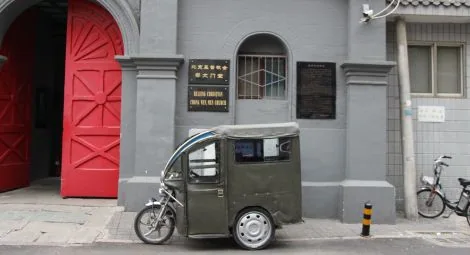
Two government organisations control Protestant churches in China: the China Christian Council (CCC) and the Three-Self Patriotic Movement (TSPM). The CCC oversees ecclesiastical affairs, seminaries and ecumenical relations with international church bodies. The CCP applies pressure on churches to join the TSPM, which was theoretically founded on the three principles of self-governance, self-support and self-propagation. In practice, however, both are ‘committed to establishing comprehensive church regulations, operating church in accordance with laws and regulations and implementing strict governance of the church in all aspects’ and ‘systematically advancing the Sinicisation of Christianity’.
All aspects of TSPM church operation are closely monitored by the state, and freedom to worship independently is repressed. On 17 March 2026, for example, 73-year-old Pastor Wang Sanyuan was detained; officials are yet to make a statement on his location or criminal charges, and there is no indication that he has been able to meet with a lawyer. Pastor Wang is the lead pastor of Changchunli church, which has registered with the Religious Affairs Bureau in Jinan, Shandong Province. He is known to suffer from cardiovascular health problems for which he has been hospitalised several times.
The house church movement in China refers to groups which operate outside the CCC-TSPM framework. In choosing to remain unregistered these churches are deemed illegal. Authorities use surveillance to gather data and threaten house churches until they execute a police and lawfare crackdown on one or more churches in a local, regional or national network.
Case study: Zion Church
Zion Church is an unregistered Protestant house church which is estimated to serve at least 5,000 members and has faced hostility from the authorities for several years. In September 2018 officials in Beijing shut down the church’s main building after it refused to install 24 closed-circuit cameras. On 10 October 2025 the Chinese authorities launched a crackdown that saw 28 Zion Church leaders, including the church’s senior pastor Ezra Jin Mingri, detained in 11 cities across the country. On 18 November Pastor Jin and 17 others were formally arrested on charges of ‘illegally using information networks’ for operating a hybrid, online and in person, church model nationwide. This marked the largest crackdown on a single church since the Cultural Revolution ended in 1976.
On 18 June 2026, nine of the detainees were released on bail pending trial. The remaining nine detainees, including Pastor Jin, were transferred to the Yinhai District People’s Procuratorate in Beihai City, Guangxi Zhuang Autonomous Region, to face prosecution, with the charges against them reportedly having been escalated to ‘illegal business operations’ and ‘fraud’.
On 4 July Pastor Jin was released from detention and transported to the United States. He is currently publicly advocating for the release of the remaining six Zion Church pastors, one Elder, and a pastor’s wife who remain in detention. Court hearings ran from 14-18 August, but it was not possible to reach a verdict, given the unusually accelerated procedure, and the trial has been delayed.
Case study: Wenzhou City, Zhejiang Province
Over the past decade Zhejiang Province has seen an intensification of restrictions on independent churches, centring on Wenzhou City due to its large Christian population. Pastor Huang Yizi of Fengwo Church has been imprisoned multiple times, including during a crackdown from 2014-2016 which saw crosses removed from more than 1,500 churches across Zhejiang. On 26 June 2025 Pastor Yizi was again detained and on 24 April 2026 the Pingyang County People’s Court in Wenzhou held public hearings as he faced charges of ‘illegal business operations’.
In June 2025 Wenzhou mayor Li Ben forcibly erected a flagpole and raised the national flag at a meeting of Yayang Church. Church leaders and members were subsequently summoned and threatened and on the night of 14-15 December 2025, hundreds were held for questioning with more than 1,000 police deployed. Over 20 were arrested and the demolition of the church building began in January 2026 and was complete by May.
On 5 August 2026 Pastor David Tang, the founder and senior pastor of Wenzhou’s Purpose Driven Church, a church financial administrator and five church workers, were detained. They are reportedly being held at Chongming Detention Centre, Shanghai, in a cross-provincial police operation. Authorities have not disclosed the reasons for their detention. Purpose Driven Church has reportedly refused to join the TSPM.
Taoism and traditional Chinese religion
Taoism is the only religion of the five organised by the state to have originated in China. Taoism and Han-Chinese Buddhism suffer the least violations of FoRB as the CCP seeks to present a positive facade to the international community and tourists. On 1 July 2026 the Chinese Taoist Association (CTA) organised a live broadcast of Xi Jinping’s speech on the 105th anniversary of the CCP. CTA President Li Guangfu directed ‘the Taoist community to comprehensively advance the construction of a strong nation and the great cause of national rejuvenation’. Confucian philosophy and folk religious shrines have similarly experienced leniency as tools of social harmony.
Unrecognised religion
Judaism
Judaism is not one of the five centrally administered religions. Most Jewish communities in Chinese cities consist of expatriates. There is an isolated community of indigenous Jews in Kaifeng, the former imperial capital. Intermarriage and assimilation gradually reduced the 1000-year-old group. Since 2015 Xi-era restrictions on foreign contact and expression have further dispersed Kaifeng Jews, and on 7 April 2023 Esther Guo Yan was reportedly abducted and interrogated by police for five days for her role in guided tours of the Jewish sector. Stars of David and other historical markers have since been removed from the area to eliminate the group.
Unorthodox religion
Unorthodox religion is prohibited under Article 300 of the Criminal Law and maligned by the official term xie jiao,which translates as ‘evil cults’ and refers to heterodox or syncretistic teaching. Affiliation carries a punishment of at least three to seven years imprisonment. The China Anti-Cult (Fan Xie Jiao) Association, or CACA, is a quasi-nongovernmental network that functions as a research and propaganda arm against heterodox organisations. In 2014 the association released a list of 20 groups designated as cults and criminalised; in 2017 eleven were listed as dangerous.
The first ‘dangerous’ group on the list is the spiritual movement Falun Gong, which has been banned since 1999. On 31 December 2025 the Falun Dafa Information Center reported documentation of at least 5,290 deaths of Falun Gong practitioners in China from torture or abuse, excluding cases of forced organ harvesting, since 1999, and over 4,000 cases of arrests and detentions in 2025 alone. From March 2024 to July 2026 the centre also tracked over 200 cases of violent threats against Falun Gong practitioners internationally.
Shen Yun Performing Arts, a global dance troupe united by Falun Gong spiritual practice and celebrating Chinese culture before communism, has been repeatedly subject to lawfare, with events cancelled due to false bomb threats from agents linked to China.
Unorthodox Christian-inspired religions make up eight of the 11 ‘dangerous’ groups and include the Full Scope Church, the Shouters (huhan pai) and the Unification Church. Possession of a copy of the Recovery Version of the Bible or books written by Watchman Nee and Witness Lee risks prosecution. Recently, the Church of Almighty God has received greater attention in propagandist CACA entries describing how ‘victims’ disrupt social cohesion. Other blacklisted groups include the Guanyin Method of Buddhism and the True Buddha School.
Hong Kong
As of 1 August 2026, 415 people have been pro or retroactively arrested in cases which ‘endanger national security’ under the National Security Law introduced in 2020. The number includes Catholic pro-democracy activist Jimmy Lai, a British citizen who was sentenced to 20 years imprisonment on 9 February 2026 at age 78, which amounts to a life sentence. This has created an atmosphere of self-censorship.
On 2 September 2026, 29-year-old pro-democracy activist Joshua Wong pleaded guilty to charges of collusion with foreign entities, which carries a maximum sentence of life in prison, for his role in anti-extradition protests in 2019 and singing the protest anthem ‘Sing Hallelujah to the Lord’. He has already been in detention for six years. At the time of writing, no date has been set for sentencing.
A long running annual vigil held on 4 June, the anniversary of the 1989 Tiananmen Square Massacre, in Victoria Park, has been extraterritorially suppressed since 2023.
Transnational repression (TNR)
Asia
On 27 February 2025, 40 Uyghur Muslims were returned to China by Thai authorities after over a decade of prolonged detention in Thailand. The UN High Commissioner for Human Rights Volker Türk described the deportation as a ‘clear violation of international human rights laws and standards’ echoing events in 2015 when Thailand deported 109 Uyghurs under CCP pressure. In August 2026 UN experts noted with concern the approval of procedures by the Thai Cabinet on 14 July for the expedited deportation of foreign nationals.
China’s continued military presence in the South China Sea and intimidation of the democratic self-governing island of Taiwan weaken human and sovereign rights protection. Japanese-born Taiwanese citizen Akio Yaita has been vocally critical of Beijing’s new ethnic unity law and outspoken on FoRB. His assault on 6 July 2026 in Taichiung, during which he was hit in the face by a suspect from Guangdong Province, China, was described as the ‘first case of transnational repression’ in Taiwan since the law was introduced.
China is party to the 1951 Refugee Convention and its 1967 Protocol, yet it routinely repatriates escapees to Democratic People’s Republic of Korea (DPRK), where they are at grave risk of arbitrary detention, communal torture and even death. As of March 2026, the Database Center for North Korean Human Rights (NKDB) had recorded 8,245 cases of forced repatriations from China over more than two decades. According to the NKDB, ‘the overwhelming majority’ of cases ‘involved group returns’. Refugees repatriated to the DPRK are routinely asked if they have had any contact with Christian groups in China, and subjected to worse treatment if so.
China’s economic-first posture in Myanmar effectively provides cover for the military’s systematic destruction of churches, places of worship, and Christian minority settlements across Kachin and Chin States. On 20 August 2026 the US State Department designated Min Zin, a Myanmar-born American citizen, as wrongfully detained by China in Kunming, Yunnan, on 3 June 2025. Min is the founder of the Institute for Strategy and Policy (ISP) Myanmar, a leading independent research body documenting China-Myanmar border dynamics and military violence. He faces charges of espionage. In July 2026 China intensified its efforts to deport hundreds of migrant workers back to Myanmar where they face arrest or serious harm.
UK
On 16 October 2022 staff at the Chinese Consulate in Manchester instigated an assault on Hong Kong democracy campaigner Bob Chan, resulting in six Chinese officials being removed from the UK. TheCCP has also been accused of conducting intelligence-gathering on Western university campuses by sponsoring Chinese students.
On 20 January 2026 plans were approved for a China mega-embassy in London, set to be the largest in Europe, despite debate about diplomatic immunity, espionage and security. At protests on 17 January at the proposed Royal Mint site, UK opposition leader Kemi Badenoch alleged that MPs had been ‘harassed and sanctioned’ by China. A High Court challenge failed on 31 July. It is unclear whether the Burnham administration will uphold this decision.
Recommendations
To the government of China:
- Ratify the International Covenant on Civil and Political Rights (ICCPR); the International Convention for the Protection of All Persons from Enforced Disappearance (ICPPED); and the Optional Protocols to the Convention against Torture (CAT), to the Convention on the Elimination of All Forms of Racial Discrimination (CERD), and to the Convention on the Elimination of All Forms of Discrimination against Women (CEDAW).
- Ensure that the Measures for the Suppression of Illegal Social Organisations exclude gatherings of religious groups, ensuring all religious groups can organise themselves independent of state-sanctioned associations, and amend Article 36 of the Constitution to grant the right to FoRB as a fundamental right in accordance with Article 18 of the Universal Declaration of Human Rights (UDHR).
- Repeal the Law for Promoting Ethnic Unity and Progress and guarantee the cessation of policies aimed at erasing religious and cultural identities through Sinicisation in accordance with Article 27 of the UDHR.
- Reverse construction projects in Sichuan Province threatening Tibetan heritage sites and allow independent access to United Nations Educational, Scientific and Cultural Organisation (UNESCO) and relevant UN mechanisms to protect religious and cultural heritage in accordance with the International Covenant on Economic, Social, and Cultural Rights (ICESCR).
- Repeal or amend the National Security Law and Article 23, ensuring that these laws do not suppress freedom of expression or other fundamental rights, and review recent excessive sentences delivered in circumstances militating against due process.
- Cease TNR by means of intimidation, threats or harassment against foreign nationals and Chinese nationals living abroad.
- Repeal or amend the Patriotic Education Law and regulations pertaining to education in accordance with Article 14 of the Convention on the Rights of the Child (CRC), ensuring linguistic, academic and religious/cultural freedoms and cessation of state-led ideological indoctrination. In addition, repeal the Measures for the Administration of Internet Religious Information Services and regulations pertaining to online religious activity.
- Repeal laws and regulations pertaining to unorthodox religious groups (xie jiao), including Article 300 of the Criminal Law.
- Respect the autonomy of religious groups in the appointment of religious leaders, including by publicly disclosing the Sino-Vatican Accord and other secret agreements, ceasing interference in the succession of the Dalai Lama, and immediately and unconditionally releasing Gedhun Choekyi Nyima, disclosing his whereabouts, health status and legal status.
- Immediately and unconditionally release religious leaders detained in connection to their religion or belief, and grant full medical, legal and family access to those named in this briefing.
- Extend a standing invitation to UN Special Procedures, granting unhindered access to all parts of the country, including the NHAR, Tibetan Autonomous Region (TAR) and XUAR. In addition, ensure full and unhindered access to the UN High Commissioner for Human Rights, his office, and other international human rights bodies and experts.
To the United Nations and Member States:
- Establish an independent international investigative mechanism on China, with regular reporting to the UN HRC and UN General Assembly (UNGA), including the investigation of allegations of transnational repression (TNR) targeting Chinese diaspora communities and non-diasporic foreign nationals.
- Call on China to repeal the Law for Promoting Ethnic Unity and Progress or regulations that legitimise TNR, and strengthen protections for diaspora communities, human rights defenders, journalists, religious leaders and activists facing TNR or intimidation linked to Chinese state actors.
- Ensure all relevant UN mechanisms, including the UN Special Procedures and Treaty Bodies, include the right to FoRB in their reporting on China, addressing the specific vulnerabilities and violations faced by religion or belief communities and those seeking to defend them, and work with civil society organisations specialising on FoRB in China to achieve this.
- Ensure that asylum seekers belonging to ethnic and/or religion or belief communities are not forcibly deported to China. Urge the Thai Cabinet and other states to suspend deportation/extradition to China where there is risk of persecution, arbitrary detention, torture or enforced disappearance.
- Make urgent representations to the Chinese authorities, including in public statements, regarding individual cases, and request clarification on both the wellbeing of prisoners and the reasons for detentions. Urge them either to proffer legitimate charges in line with international human rights standards or ensure immediate releases.
- Seek input from civil society organisations specialising in FoRB in China, including when drafting recommendations for the Universal Periodic Review process.
- Urge the government of China, at every appropriate opportunity, to make the reforms highlighted in the recommendation section above ‘To the government of China’.
To the European Union and Member States:
- Continue to assess the expediency of the EU-China human rights dialogue. In case of its further iterations, maintain the practise of listing individual cases within the statement that the EU unilaterally makes following the annual human rights dialogue. This should continue to be shared on platforms with wide readership inside China such as Weibo, given that Embassy posts are not censored.
- Following the Corporate Sustainability Due Diligence Directive, Forced Labour Regulation, the ‘de-risking’ agenda, and the freezing of the Chinese Agreement on Investment, continue to consider economic measures that remove or minimise the potential for European complicity in economic activities relating to human rights violations in China.
- Consider imposing targeted sanctions on individuals and entities responsible for serious human rights violations.
- Make urgent representations to the Chinese authorities regarding individual cases, requesting clarification on both the wellbeing of prisoners and the reasons for detentions. Urge them either to proffer legitimate charges in line with international human rights standards or ensure immediate releases.
- Work with civil society organisations specialising in FoRB and human rights in China to prepare speaking points ahead of any routine high-level dialogues with China, in keeping with the EU’s commitment to ‘further integrate [human rights] in all EU external policies’.
- Urge the government of China, at every appropriate opportunity, to make the reforms highlighted in the recommendation section above ‘To the government of China’.
To the government of the United Kingdom:
- Urge the new administration to reconsider the High Court dismissal appeal against the approval of the China mega-embassy plans and conduct thorough review of risks, including surveillance and harassment of local residents and British citizens, transnational repression of Chinese diaspora communities in the UK, potential abuse of diplomatic privileges/immunity, intelligence-gathering, and security threats to the UK government institutions and armed forces.
- Consider imposing sanctions on individuals and entities responsible for human rights violations and review UK trade engagement to avoid complicity in FoRB violations. Future trade agreements should be made contingent on FoRB guarantees.
- Make urgent representations to the Chinese authorities regarding individual cases, requesting clarification on both the wellbeing of prisoners and the reasons for detentions. Urge them either to proffer legitimate charges in line with international human rights standards or ensure immediate releases.
- Work with civil society organisations specialising in FoRB in China to prepare statements, reports, and urgently raise cases with a strong connection to the UK during the Prime Minister’s Special Envoy for FoRB’s engagements with Chinese officials.
- Urge the government of China, at every appropriate opportunity, to make the reforms highlighted in the recommendation section above ‘To the government of China’.
To the government of the United States:
- The State Department should continue to closely monitor FoRB in China and maintain the country as a Country of Particular Concern, as recommended by the US Commission on International Religious Freedom (USCIRF).
- The Ambassador-at-Large for International Religious Freedom, once nominated and confirmed, and USCIRF commissioners should request an invitation to visit China with unhindered access to all parts of the country and religious groups.
- Strengthen enforcement of the Uyghur Forced Labor Prevention Act (UFLPA) by conducting regular assessments of imports, investments and supply chains linked to the XUAR, and hold companies accountable for complicity in forced labour and related human rights abuses.
- Deny visas to individuals and impose sanctions on entities responsible for human rights violations, and review US trade engagement to avoid complicity in FoRB violations. Future trade agreements should be made contingent on FoRB guarantees.
- Make urgent representations to the Chinese authorities regarding individual cases, requesting clarification on both the wellbeing of prisoners and the reasons for detentions. Urge them either to proffer legitimate charges in line with international human rights standards and to ensure compliance with the Mandela Rules or ensure immediate releases.
- Urge the government of China, at every appropriate opportunity, to make the reforms highlighted in the recommendation section above ‘To the government of China’.
Download this briefing as a PDF with arena-specific recommendations: EU | UK | UN | US



 English (UK)
  Español de México
  简体中文
简体中文