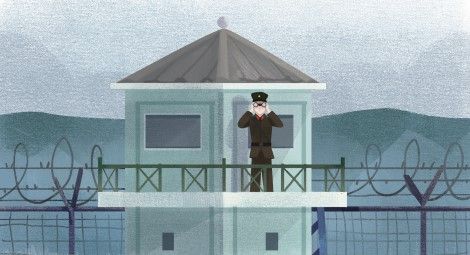
The Democratic People’s Republic of North Korea (DPRK) is a closed, isolated and repressive country. The violations of human rights perpetrated there, including the right to freedom of religion or belief, are among the worst in the world.
Individuals caught or suspected of religion or belief affiliation face harsh punishment, including detention in the DPRK’s brutal political prison camp system, torture, forced labour, and even execution. North Koreans who manage to escape the country are vulnerable to harassment, trafficking, and forced repatriation by China. North Koreans who manage to flee to Laos also face similar challenges, making Thailand their only viable option.
In 2014, the United Nations (UN) Commission of Inquiry (COI) on Human Rights in the Democratic People’s Republic of Korea (DPRK) published what is widely considered to be the most comprehensive report into human rights violations in the DPRK. The report’s findings and recommendations were extensive and comprehensive. It concluded that the ‘gravity, scale and nature’ of the violations of human rights in the DPRK ‘reveal a State that does not have any parallel in the contemporary world’.
Ten years on from the report, this report looks at freedom of religion or belief (FoRB) inside the country and considers internal and external changes which have impacted human rights, including FoRB, in the DPRK over the past decade. Changes in the DPRK’s economic situation, the impact of the COVID-19 pandemic, an accelerating North Korean arms programme, the introduction of new domestic legislation, and changes in information flows into and out of the country are all key factors. The aim of this report is to generate further discussion and innovative thinking among researchers, policymakers, civil society and funders on how to address human rights violations in the DPRK post-COI.
In 2015 a United Nations Field Office was established in Seoul in as part of the process of implementing the COI’s recommendations. The international community must ensure the implementation of the COI’s recommendations in their entirety. Action to address the North Korean regime’s routine and brutal violations of human rights is long overdue.

 English (UK)
  Español de México
  简体中文
简体中文