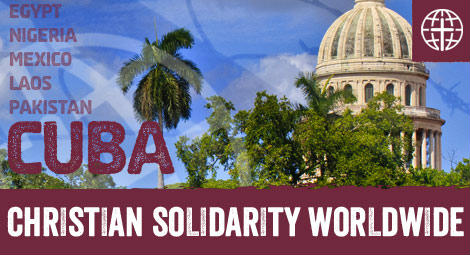

Current Religious Freedom Violations in Cuba: Questions formulated by the Patmos Institute which brings together diverse faith groups on the island. (April 2017)
Given its main objective, its need for international support in order to remain in power since the fall of socialism in Eastern Europe, the government in Havana has attempted to fool the world and has managed to convince some that in Cuba religious freedom is no longer violated as it once was. Constitutional changes at the beginning of the 1990s, when the State ceased calling itself an atheist state and proclaimed itself to be secular (laico), and the papal visits are the regime’s principal arguments to call positive attention to itself.
However, the truth is that religious freedom continues to be trampled upon daily due to policies emanating from the highest levels of the central government. The Religious Affairs Office of the Central Committee of the Cuban Communist Party is the body at the very top of power and issues guidelines about how to treat any religious group or individual who has decided to exercise their freedom of faith, whatever that may be. It is therefore inconceivable that, as if it did not already have a political monopoly as the only party, and as it is ideologically communist, it has an office dedicated to pressure, manipulate and blackmail historically established religious groups and is dedicated to contain, confront or eliminate new religious movements, when they do not align with their political interests, to keep themselves in power at any cost.
To read ‘Thirty questions for the Cuban regime’ in full, click here to download the pdf.

 English (UK)
  Español de México
  简体中文
简体中文