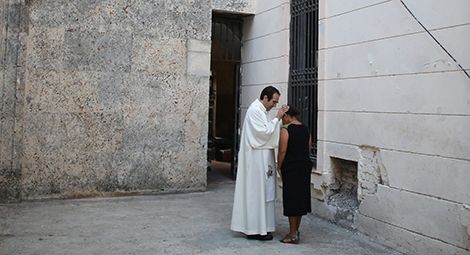
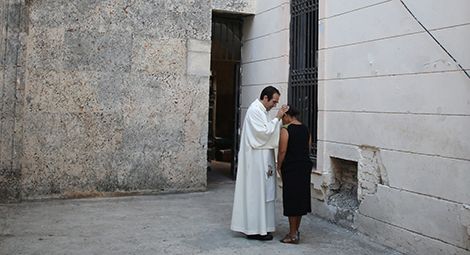
The Cuban government continues to routinely and systematically violate freedom of religion or belief (FoRB). In 2019 CSW received 260 documented cases of FoRB violations. There were negative developments in terms of the government’s overall approach to FoRB, with a new constitution weakening protections for FoRB and the associated right of freedom of conscience. At the same time there were some positive developments within the religious sector itself. Religious groups, especially Protestant Christian groups not affiliated with the Cuban Council of Churches (CCC), and the Roman Catholic Church through the Council of Catholic Bishops, spoke out in an unprecedented way about the new constitution and its potential impact on FoRB. The creation of a new umbrella group for Protestant denominations, as an alternative to the CCC, bringing together the largest Protestant groups on the island, is a show of unity unseen in Cuba since before 1959.
Reports of harassment of religious leaders increased in parallel with the religious groups’ increasing outspokenness and moves towards more unity. A number of major religious leaders have been banned from leaving the country. CSW also received reports of threats and cases of arbitrary detention involving religious leaders and FoRB defenders. A few cases involved false charges being brought against the religious leaders or FoRB defenders. At times the harassment takes a subtler, harder to document form, targeting the children of religious leaders at school, for example.
Click here to download the full report on Freedom of Religion or Belief in Cuba.

 English (UK)
  Español de México
  简体中文
简体中文