

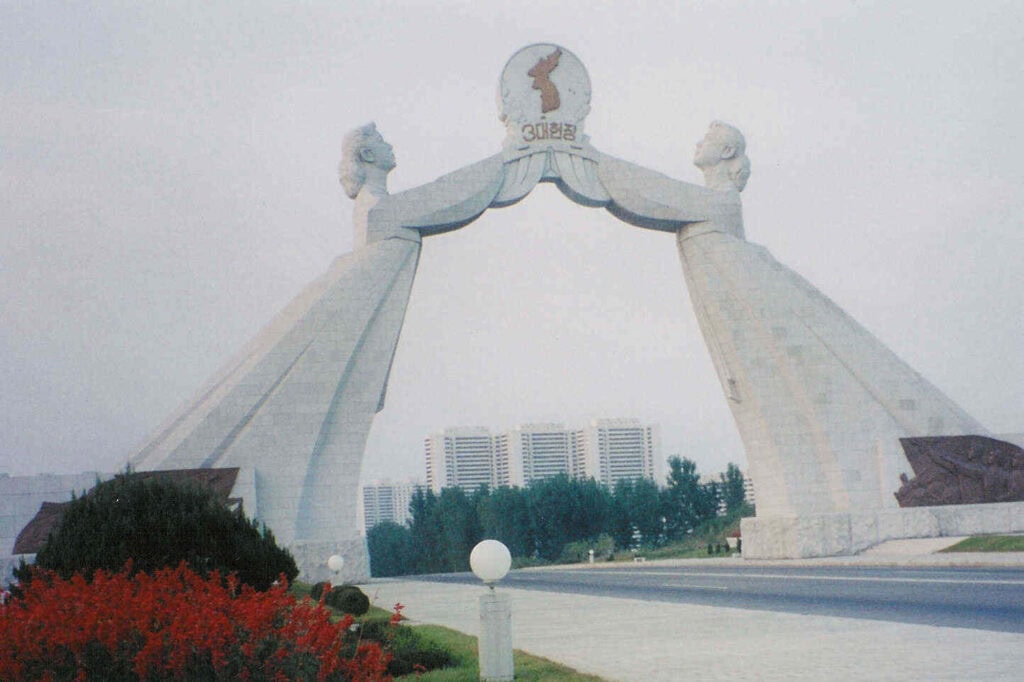
Today, marching, singing and dancing will flood the capital of one the most notoriously secretive and closed nations in the world. 15 April is the “Day of the Sun” in North Korea, one of the most important national holidays in the country because it venerates the late founder and perpetual leader, Kim Il-Sung.
Despite the awesome displays of colourful dance events and firework displays to celebrate Kim Il-Sung’s perceived achievements in creating the ‘revered’ nation, the reality is far from being a day in the sun, but more a descent into darkness.
The ‘Great’ Leader Who Founded a Despotic Regime
Kim Il-Sung, the ‘Father’ of North Korea, was highly instrumental in establishing one of the most authoritarian regimes in the world. Between the late 1940s and early 1990s he oversaw the creation of a country ruled by fear. The Workers’ Party he founded crushed dissent, abducted foreign nationals, created an extremely discriminatory and hierarchical ‘songbun’ caste system, and forcibly detained hundreds of thousands into a hidden prison system, which still subjects North Koreans to forced labour, torture and even execution. Both his son, Kim Jong-Il, and his grandson, Kim Jong-Un have continued the brutal legacy.
Human Rights Violations Committed with Impunity
The 2014 United Nations Commission of Inquiry (COI) on Human Rights in the Democratic People’s Republic of Korea concluded that the leadership of North Korea has and continues to commit “systematic and appalling human rights abuses against its own citizens on a scale that is unparalleled in the modern world.” These abuses are tantamount to crimes against humanity and include public executions, torture, forced labour, sexual violence, food deprivation, incarceration in political prisoner camps (kwan-li-so), and the denial of the freedom of expression, thought and religious belief.
The songbun and prison camp systems are key features that maintain these human rights violations. Songbun classifies North Korean citizens into three classes, the “core”, “wavering” and “hostile”; it determines all aspects of one’s existence in North Korea, such as education, housing and employment. Once citizens are deemed “wavering” and certainly “hostile” they are forcibly removed from society and plunged into the hidden and torturous conditions of the prison camps.
Citizens who believe in or are found to be practicing a religion or belief are classified as part of the hostile class. Christians are especially singled out and commonly incarcerated in the infamous and remote kwan-li-soprison camps. The families of Christians are subject to “guilt by association”: whole families, up to three generations, can disappear into these camps. Hundreds of testimonies have painfully recalled the appalling conditions and human rights violations they are subject to, including forced labour, torture, starvation, and rape.
Shining a Light on Injustice
The COI’s landmark report is a tool for the international community to usher in the dawn of justice in North Korea. The UN Human Rights Council, UN General Assembly and the European Parliament have passed resolutions endorsing the Inquiry’s recommendations, and the Security Council has had formal discussions about North Korea’s human rights abuses. The Office of the High Commissioner for Human Rights has opened a field office in Seoul, as recommended by the COI. It aims to “strengthen monitoring and documentation of the situation of human rights as steps towards establishing accountability in the Democratic People’s Republic of Korea” and to “maintain visibility of the situation of human rights in the Democratic People’s Republic of Korea including through sustained communications, advocacy and outreach initiatives”.
Despite these efforts, there is more to be done by the international community to change the situation in North Korea, as the UN Special Rapporteur on human rights in North Korea, Marzuki Darusman, highlighted in January 2016. A referral to International Criminal Court is necessary to establish accountability and work towards justice. The international community must work together with determination and cooperation towards action. Nevertheless the dawn of justice has arrived and a concerted effort will enable North Korea and its citizens to truly enjoy a day in the sun.
By CSW’s North Korea Desk Officer
 English (UK)
  Español de México
  简体中文
简体中文