

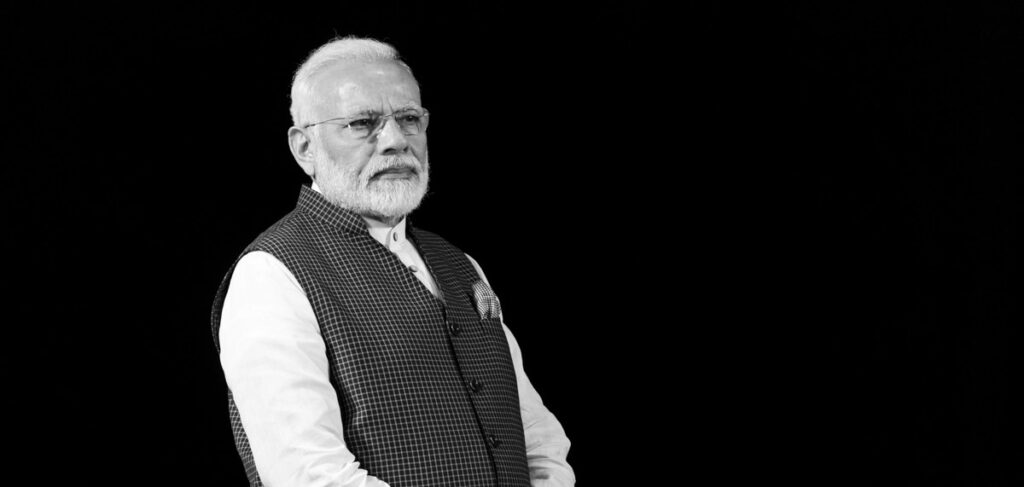
Millions of Hindus in India and across the world watched with pride as India’s Prime Minister Narendra Modi inaugurated the grand Ram Mandir (Ram temple) in Ayodhya, Uttar Pradesh on 22 January.
It was a historic moment that many devotees had been waiting to witness for decades. This is the site that is believed to be the birthplace of one of the most revered Hindu deities, Ram, and the inauguration of the temple or the Pran Pratishta ceremony (the act of consecrating the idol in the temple and bringing it to life) held deep religious significance.
More than 7,000 people were invited as guests, including top Bollywood celebrities, cricketers, large business owners and about 4,000 Hindu priests. There were seas of saffron not just in Ayodhya but across the country where people gathered in smaller local temples to celebrate the occasion.
But while this was an auspicious and significant moment for millions of tolerant Hindus around the world, the site has also been a cause of contention between two of India’s major religions for decades.
For the almost 500,000 Muslims that live in Ayodhya – and indeed the 200 million Muslims in all of India – the inauguration was a day of mourning, a grim and painful reminder of the tragic events of December 1992 in which hundreds of Muslims were killed by Hindu extremists and their holy place of worship – the Babri Masjid – was demolished in the very spot where the celebrated Ram Mandir now stands.
A chequered history
Prior to its demolition, the Babri Masjid (mosque) had stood for over 450 years. It was built in Ayodhya in 1528 under the reign of the first Mughal ruler Babur, and was used by Muslims as a place of worship until 1853, when right wing Hindu groups claimed that a Hindu temple had been destroyed to pave way for the construction of the mosque. Although there is no concrete evidence to support these claims, it must be acknowledged this could have well been the case as the pattern of razing temples and constructing mosques in their place was common in the Mughal era.
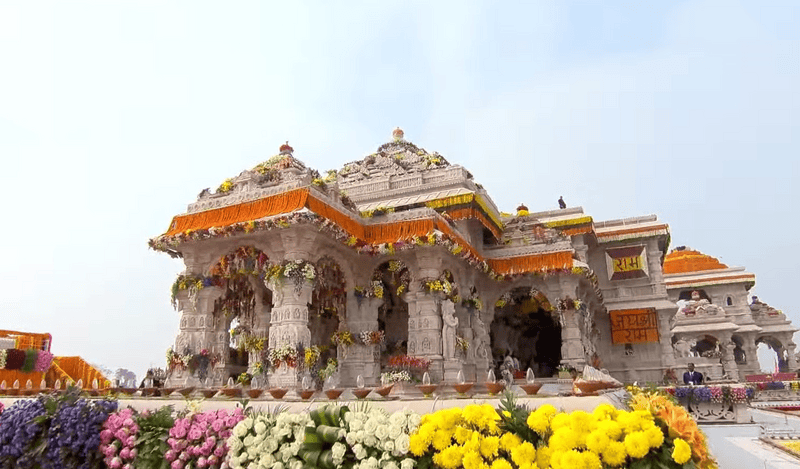
After India gained independence in 1949, the site was declared disputed and the gates were locked. In 1984, a trust was established by the right-wing Hindu nationalist group Vishwa Hindu Parishad (VHP) with the objective of constructing a temple on the disputed site. What followed was a massive campaign driven by the then-leader of the Hindu nationalist Bharatiya Janata Party (BJP) LK Advani which culminated on 6 December 1992 as thousands of Hindus gathered at the site armed with spades, shovels, axes and ropes and proceeded to demolish the mosque.
The demolition triggered protests across the country, particularly in the states of Gujarat and Maharashtra, which soon escalated into communal clashes in which over 2,000 people lost their lives. In the city of Mumbai along, six weeks of rioting led to the deaths of almost 900 people.
Muslims accounted for the vast majority of the casualties from the rioting; many were killed by police gunfire, as was the case in Ahmedabad, Gujarat, where 28 of 37 Muslim victims were found to have been shot dead by the police.
In 2003, the Allahabad High Court in Uttar Pradesh ordered an archaeological survey which found evidence of a temple underneath the site. Although the results of the survey were disputed by two prominent archaeologists, in 2019 the Indian Supreme Court ruled that the land must be handed over to the VHP trust to oversee the construction of the temple.
A separate piece of land in Ayodhya was given to the city’s Muslim community, but this was not closure. How could justice be served when those who had demolished their holy site and killed their loved ones remained free?
A political statement
While many Hindus will view the inauguration simply as a celebration of the historic restoration of one of their holiest sites, it is also a shrewdly timed political statement by the ruling BJP and its leader Narendra Modi.
With general elections due this year, many have rightly observed that the rush to inaugurate the temple – which remains unfinished – was specifically designed to win favour among Modi’s largest voter base in Uttar Pradesh, to whom he had promised to rebuild the temple before he first came to power a decade ago in 2014.
That Modi presided over the rituals instead of the temple’s priests further politicised the inauguration, to the point that several Hindu leaders who were invited to the ceremony chose not to attend.
As it has done so often over the past decade, the BJP’s embrace of a Hindu nationalist agenda had immediate effects on India’s religious minority communities. Reports emerged from several states of large groups of Hindu youth riding motorcycles through Muslim-majority neighbourhoods chanting Hindu nationalist slogans like ‘Jai Shri Ram’ (‘Victory to Lord Ram’).
In Bihar, a Muslim graveyard was set ablaze by a group celebrating the inauguration; in Madhya Pradesh, a Hindu fanatic hoisted a saffron1 flag atop a church; and in Mumbai a truck driver was violently assaulted by a mob of over 200 people after he was identified as a Muslim.
Incidents like these are already commonplace in India, but it is highly likely that they will increase in frequency over the next few months in the lead up to the election, particularly as those responsible are routinely emboldened by hateful and inflammatory remarks made by leaders within the BJP while Modi himself remains largely silent on the plight of religious minorities in the country.
The world must therefore watch political developments in India very closely, not just surrounding the elections but also in the years to come should the BJP’s hate campaigns prevail once again.
By CSW’s Founder President Mervyn Thomas CMG
Editor’s Note: In Hinduism, saffron is associated with the renunciation of material life and is a colour that has been worn by Hindu priests for centuries. In recent years it has also become increasingly associated with Hindu nationalist politics.

 English (UK)
  Español de México
  简体中文
简体中文