




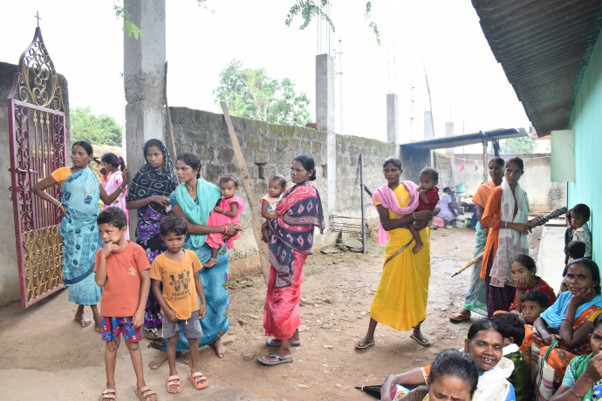
There is something unsettling about meeting someone who cannot go home.
You can hear it in the way they speak about it. Home is not a place they chose to leave behind in search of a better life. It is where their houses still stand, where their fields are, where their families have lived and worked for generations, where they raised their children, where they worshipped. It was the only world they knew, until they were forced to leave for fear of their lives, overnight, leaving all their belongings.
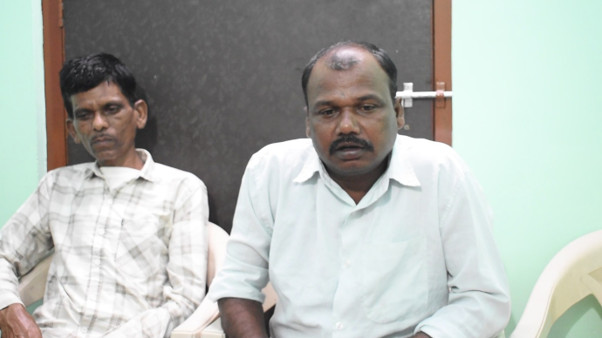
I could see the deep longing in Shobaram Kashyap’s eyes as he spoke about home. It’s been two years since he fled his village with his family and came to stay at his pastor’s house in Jagadalpur, Chhattisgarh. Since then, he’s become a father-in-law and a grandfather, but he still waits for the day when he can take his family back home, work the fields and resume life as they knew it.
That would, however, be a very dangerous mission as the villagers remain deeply hostile to Christians like Shobha.
CSW recently met with several Christian families – numbering around 90 people in total – across Chhattisgarh who had been driven from their villages because they refused to renounce their faith. Some have been displaced for only a few months, while others like Shobha have been living in exile for years. Displacement has become a continuing reality, bringing with it uncertainty about their homes, their land, their livelihoods and their future.
‘They didn’t even let us see our harvest’
For 25 years, a few Christian families in Bade Paroda village, Lohandiguda, Bastar district had gathered at Shoba Kashyap’s home for prayer and worship. For all those years, they lived alongside their neighbours without trouble because of their faith. Shobha’s son Lalit recalls, ‘We were well respected by our neighbours. Whatever problem anyone had, they used to call my father. Everyone knew they could count on him. We lived in harmony with everyone.’
But life took a turn on 31 May 2023, when the families were called to the panchayat (village council) house. Around 50 people were already waiting for them. They mocked the name of Jesus and verbally abused the Christians before the situation turned violent. The group was beaten with sticks, stones and slippers. Shoba’s ears and nose began bleeding, another’s back was left black and blue from the stones. Somehow, they managed to escape and reach the hospital with police assistance.
The harassment didn’t end there. The following month, one of the Christians’ mothers passed away, but the villagers didn’t allow them to bury her in their village. A few days later, the families were meeting at Shoba’s house for prayer when a large mob entered, shouting and threatening them. The police arrived and managed to prevent further violence, but the mob continue to shout death threats even in their presence.
Shoba recalls the harassment they faced: ‘In October [2023], when we went to reap the harvest of our corn fields, some of the villagers chased us away from our own fields, told us to convert back to Hinduism and threatened that they would bury us in the fields if they didn’t. Fearing our lives, we left our harvest untouched and went back home. The next day, there was a panchayat meeting, in which our four families were pressured again to do ghar wapsi [‘homecoming’, a term used to refer ceremonies primarily organised by Hindu nationalist groups to ‘re-convert’ members of religious minority communities back to Hinduism]. They verbally abused us in front of the police. The Town Inspector himself told us that we would be sent to jail if we didn’t oblige and follow the same customs as the rest of the villagers.’
Govind, another member of the community, adds: ‘A few days later, when it was time for harvest, the police asked us to show them our lands, when we arrived there, we saw at least 100 policemen standing nearby. After we showed them our fields, we were sent back home. The next day, we found out that all our fields, the entire place, were already harvested and stored together in one of the villager’s houses. The police then took us to his house and forced us to sign a document of sale. They told us that if we didn’t sign, we would be imprisoned.
‘They didn’t even let us see our harvest, nor did they tell us its value. They simply told us that the village head would send us the price of the harvest, after making all the deductions for the hire of the tractor and labour. We never received anything. We had more than 40 acres of land between the four families. Agriculture was our only means of living. We are corn farmers and we get harvest only once a year, with which we sustain ourselves for the rest of the year.’
The harassment continued, despite repeated complaints by the Christians to the police. In June 2024 it reached a point where they simply couldn’t live there anymore. One day, while Shobha was resting in his house, some of the villagers barged in and dragged him out of the house, they did the same with three other families, threw their belongings out and locked their doors. The families went to the police station, seeking refuge, but the police nonchalantly asked them to find somewhere else to stay. They even refused to register their complaints and instead asked them to come to a compromise with the villagers.
They sought shelter about 18 kilometres away in Jagadalpur and have been living there ever since. They have not been able to return, and their agricultural land is reportedly being cultivated by others.
‘They gave us two days’
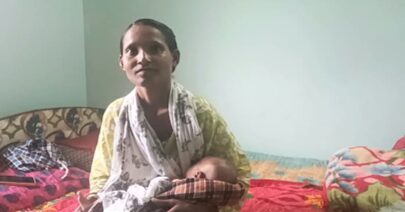
As we continued our journey towards Kanker District, I met Sunita Yadav from Kedkatta village, about 130km from Bade Paroda. As she snuggled her newborn baby, she described the horrific ordeal that her family had just gone through.
‘It was 1 July [2026]. The villagers called a meeting. We were asked if we do ghar wapsi. My husband’s brother and a few others agreed to reconvert. But my husband, who is a pastor, boldly said we would never deny our faith. So they asked us to leave the village. They barged into our house and threw all our belongings out and forced us to leave. We begged them for some time as we had a newborn baby. They gave us two days.
‘Two days later, they came again, some of them were drunk. They said we would have to leave immediately. It was raining heavily. I was scared, our baby was scared, she was crying. I felt so helpless. My husband managed to hire a vehicle, we took as many of our belongings as we could and travelled all the way here. We are now renting this house, which belongs to a Christian friend of ours. If we had agreed to do ghar wapsi, we would have had to take part in all the Hindu rituals and idol worship. When we became Christians, we were set free from all this bondage, why would we choose to go back to that. We know that God will take care of our needs.’
For families like Sunita’s, living away from their village means that even basic things such as obtaining rations have become difficult.
These families are trying to rebuild ordinary lives in extraordinary circumstances. They need food, shelter and employment, but more than anything, they need security. Temporary shelter can help a family survive, but it cannot replace home. A bag of groceries cannot replace a field. A rented room cannot replace the community in which your family has lived for generations.
‘We fled in the night’
When we arrived at Bethesda Church, Sukma District, we found more than 30 Christians who were taking shelter at the church after being attacked by their villagers and forced to flee. One of the women from Sadrapal village described how religious fanatics had brutally attacked them during a church service in May this year, leaving many severely injured. One of the women showed me scan images of her broken bones.
‘We fled in the night, on foot with our children. We couldn’t bring any of our belongings, not even an extra pair of clothes. I have twin toddlers, I didn’t have any clothes for them when we arrived [at Bethesda Church],’ another woman said.
The women also spoke of how their children were not allowed to mingle with other kids. Their children were chased away or beaten if they tried to go near the other kids. They spoke of how Christian children are not given admission in schools and colleges simply because they are Christian. They are not given jobs either.
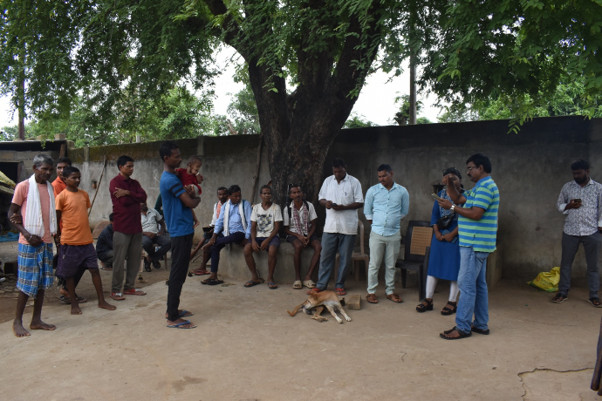
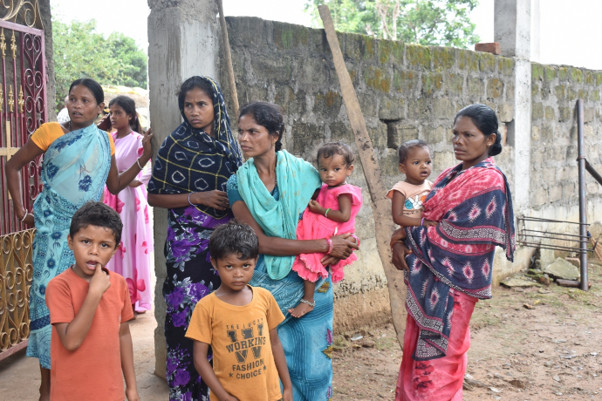
We then proceeded to meet a few families from Chitrakoot, who told us that religious fanatics give alcohol to the villagers and ask them to go attack the Christians. In a rare instance, when the village head actually stood up for the Christians and asked the villagers not to attack them, he was removed from his position.
According to the local helpline group United Christian Forum, Chhattisgarh has consistently recorded the second-highest number of attacks on Christians in India for the last few years, trailing only Uttar Pradesh.
Justice must mean more
As we said goodbye to the families in Chhattisgarh, there was much to pray for: protection, provision, healing, justice and strength. But what they look forward to the most is that they would be able to return safely to their homes and agricultural lands.
The right to freedom of religion or belief means little if choosing one’s faith means being driven from one’s home and then being expected to build a new life somewhere else. Displacement should not become a permanent consequence of any religion or belief. For those who have been forced out, justice cannot simply mean that the violence is recorded, a complaint is filed or a case reaches court. Justice must ultimately mean being able to return safely to one’s home, cultivate one’s own land again, worship without fear and live as a full and equal citizen.
Their homes are still there. Their fields are still there. Their memories are still there. They are simply waiting for the day they can finally return.
By CSW’s India Researcher


 English (UK)
 Español de México
 简体中文