
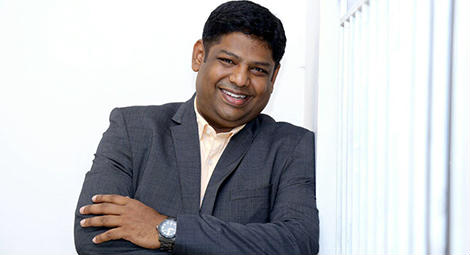

Nehemiah Christie is a human rights defender working in South India. He shares with us his thoughts on the current climate in India, and his experience of defending the rights of religious minorities in his country.
What does the situation currently look like in India?
My experience of working as a human rights and religious freedom defender in South India has considerably worsened since Modi’s government came into power [in 2014]. The current government relies heavily on the backing of Hindu fundamentalists, which has led to an increase in the threat to religious minorities, particularly to Christians. In Tamil Nadu, where I work, human rights defenders have faced extreme hostility. Some have been shot, raped and threatened by both government and non-government actors. [Note: Modi’s government won the May 2019 elections with a landslide victory.]
Why do you work to defend the rights of people of all faiths?
Is this not their human right? To practise their faith? Those who support Hindu supremacy in India argue that human rights defenders work against the country’s interests, but this simply isn’t true. I’m proud that my country has such a great constitution, which protects fundamental freedoms. India was among the first countries to adopt the Universal Declaration of Human Rights in 1948. This is why I find it so sad that, as human rights defenders, we now face the threat of violence on a daily basis. I hear noises outside my house at night, and banging on my windows. It’s tragic that in India– a country of such diverse cultures, languages, religions and beliefs – these things now happen every day to those of us who are trying to uphold the basic human right to practise one’s religion or belief of choice.
What threats do human rights defenders in India face?
The government uses the Unlawful Activities Prevention Act (UAPA) to target human rights defenders. The law deals with people who are considered to be working against the state, and some human rights defenders have been accused of being members of terrorist organisations. A person can be detained without bail for six months under this law, which can be extended. We constantly live in fear that another one of us could be the next person charged under this legislation. I’m also constantly harassed and monitored by the authorities. I give a speech somewhere or go to speak with victims of human rights abuses and before I even get home, I’m called by the authorities asking how the trip went – a constant reminder that my every move is being watched.
What would help you and other human rights defenders in India to be even more effective in your work?
For us, the support of the international community is really important. And training for human rights defenders, like the Defend the Defender project organised by CSW, is absolutely vital to our safety and our work. We also need to ensure digital security, especially on social media, where individuals can harass human rights defenders without fearing the repercussions.
Find out more aboutCSW’s Defend the Defender project, and how you can support Nehemiah and other human rights defenders in South and Central Asia atdefendthedefender.com
 English (UK)
  Español de México
  简体中文
简体中文