
Shopping for a bargain is part of our everyday lives – nothing beats getting that big discount on the weekly shop.
The sad fact is that that bargain might come at the cost of human rights, especially when it concerns cut-price products from countries with some of the worst human rights records – China, India and Bangladesh to name just a few.
So how do we ensure that profits don’t triumph over people?
You may not realise it, but the very trade agreements that bring us those cut-price products are our best bet. They provide an effective lever for encouraging governments to protect human rights, so the way they negotiate these agreements is a very tangible indication of how dedicated they are to advancing human rights.
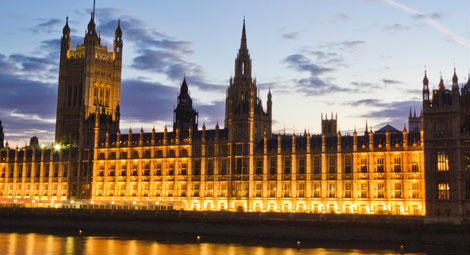
As the UK prepares to leave the European Union it will be signing new trade agreements with countries all over the world, and while the world’s eyes are on the outcome of Brexit negotiations, this is also the perfect opportunity for the UK to demonstrate its commitment to human rights, by rejecting low prices for food and other products if that means compromising on fundamental rights and freedoms.
Human rights are in the UK’s moral interest
Last September the House of Commons published a report entitled ‘Global Britain: Human rights and the rule of law’, examining the UK’s international human rights diplomacy.
The report commented that following withdrawal from the EU, ‘The [UK] Government will face conflicting priorities between human rights and other Government policies, especially trade deals. This may create short term conflicts, but the prioritisation of human rights is in the UK’s long-term commercial, as well moral, interest.’
This report could not be clearer in setting out how vital it is for the UK not to sideline human rights when striking new trade deals. The report goes on to say, ‘The Government should commit to including human rights clauses within future trade agreements.’
Human rights are key for business
Time and again research shows that protection of freedom of religion or belief and other human rights creates a favourable environment for business. A society where human rights are consistently respected and upheld is a stable society, and stability is vital for business operations.
It’s in every government’s interests to create a favourable business environment, which will lead to greater foreign investment, greater growth and, ultimately, better conditions for their citizens. This is why it’s possible to make a strong argument for human rights improvements to feature prominently in trade agreements.
Case study: Egypt In 2016 the Foreign & Commonwealth Office (FCO) highlighted Egypt as a country of concern due to its human rights abuses. CSW’s own research shows that human rights have worsened progressively, against a background of rising terror attacks by the local branch of Islamic State (IS, Daesh).
UK exports to Egypt dropped a little in 2017, but Egypt continued to import UK arms – £6.5m worth in that year alone. Some evidence suggests that UK-supplied military equipment was used in the past to violate human rights; however, the UK continues to export military hardware to Egypt despite weapons sale restrictions imposed by the EU.
In 2018 the UK began trade talks with Egypt in preparation for Brexit, despite the country remaining on the FCO’s list of human rights abusers.
What happens now?
Unfortunately, the ‘Global Britain’ report paints a dismal picture of what we can expect from the UK’s future trade partnerships: ‘In preparation for Brexit, the UK is seeking to roll over existing trade agreements, and to strike new deals with other countries. However, there is concern that this may be used as an opportunity to remove the human rights components of the deals. Lord Ahmad [Minister of State at the FCO and the Prime Minister’s Special Envoy on Freedom of Religion or Belief] said that he could not give assurances on “what clauses, in what way, in what nature” future trade deals would include human rights.’
CSW believes the UK must seize this opportunity to do the right thing, morally as well as commercially. We believe human rights are critical to enabling societies and countries to flourish, and that world leaders have a duty to protect freedom of religion or belief. We agree with the UN High Commissioner for Human Rights Michelle Bachelet, who said in her opening statement at the 40th Human Rights Council session that ‘human rights-based policies…deliver better outcomes for people – people across the social and economic spectrum, and beyond borders’ and ‘also help to develop stronger economies.’
The UK must therefore press for human rights improvements to be included in its trade agreements wherever necessary. It must not be seduced by the promise of low prices at the expense of people’s rights and freedoms.
And we continue to work towards a world where everyone can peacefully practise a religion or belief of their choice; a world of freedom and justice for people of all faiths or none.
 English (UK)
  Español de México
  简体中文
简体中文