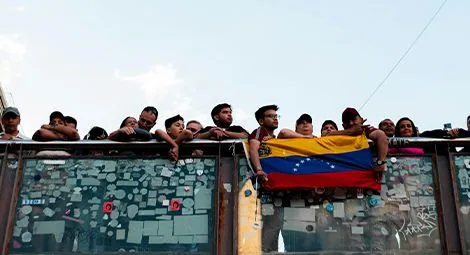

Religious leaders in Venezuela are under constant surveillance. Many now practice a form of self-censorship out of concern that a government informant might be listening. They are careful about what they say – not only in public prayers or sermons, but in private or informal meetings, too.
The government has tried to project an image of religious freedom by sponsoring religious ceremonies and establishing religious benefit programmes. Some religious groups have accepted this preferential treatment in exchange for their loyalty. Others, however, denounced the dictatorship, refused the incentives, and paid the price. They have faced discrimination and, in some cases, have been accused of inciting hatred or threatening public order. Yet all religious leaders – whether they accept these benefits or not – remain under surveillance.
Government informants in congregations are common. Religious leaders who are perceived to have said the ‘wrong’ thing are treated as traitors. In some cases, they have been attacked by illegal armed groups supported by the regime.
A pastor from El Callao told us about the time a stranger asked him about his family, mentioning the name of his children’s school and the schedule of activities his wife attended at church. The pastor questioned why he was being asked for this information, to which the man replied:
‘We know everything about you. We’re very concerned about the safety of religious leaders in the region, and we want you to stay alive. So, it’s good for you to be careful with what you preach and who you support.’
‘It’s very common to see people we’ve never met before, listening carefully, taking some notes, some on their phones, others in small notepad.’ A pastor from Tumeremo
Learn more
Our latest report on Venezuela takes a detailed look at the challenges facing religious communities: csw.org.uk/VenezuelaReport
Context
Venezuela has been governed by two successive authoritarian regimes, backed by the Socialist Union of Venezuela Party (PSUV). Party leaders and their allies remain entrenched in power, despite the United States’ forced removal of President Maduro on 3 January 2026.
 English (UK)
  Español de México
  简体中文
简体中文