Introduction
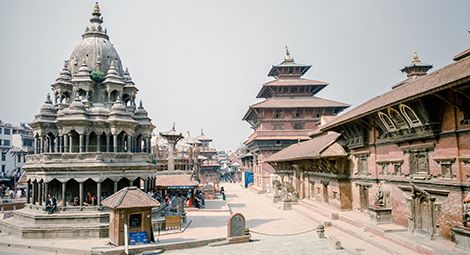
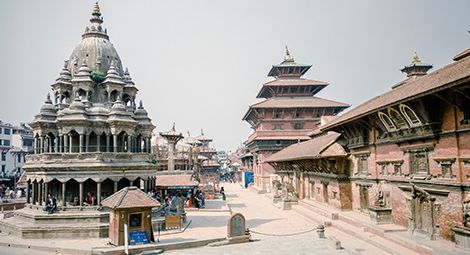
Freedom of religion or belief (FoRB) is of particular importance in light of Nepal’s transition from a Hindu monarchy to a secular democratic republic, which was completed with the new constitution promulgated in 2015. However, CSW remains deeply concerned about the state of FoRB in the country.
Constitution
The constitution criminalises the freedom to manifest a person’s religion or belief. While Article 26 states that “each person shall be free to profess, practice and preserve his religion according to his faith,” Article 26(3) states that to “convert another person from one religion to another or any act or conduct that may jeopardise other’s religion is punishable by law.” This endangers both the right to freedom of expression, and the right to follow a religion of his or her own choice and to manifest that religion in word and action; two fundamental rights which are guaranteed in international law.
Although the constitution recognises Nepal as a secular state, the current definition of ‘secularism’ is restrictive and inconsistent with international human rights framework and prejudices other minority religions, which will legitimise discrimination on the basis of religion.
The constitution (Article 4) explains ‘secular’ to mean “religious, cultural freedoms, including protection of religion, culture handed down from the time immemorial.” A past Supreme Court judgement has interpreted this to mean protection of Hinduism.
Penal code
Nepal’s penal code came into force on 17 August 2018. The code contains several provisions which severely restricts FoRB:
- Section 155 states “damaging or injuring or, in any way, defiling, destroying or polluting any place of religious worship with the intent of insulting the religion or religious feeling.”
- Section 156 criminalises the ‘outraging’ of religious sentiments. It is similar to Pakistan’s so-called blasphemy laws which are poorly defined and widely misused to settle personal scores, to target religious minorities, or to further extremist agendas.
- Section 157 states “no one should create obstacles knowingly in the religious tradition of other faith being practiced since ancient times.”
- Section 158 criminalises ‘conversion.’ This could be invoked against a wide range of legitimate expressions of religion or belief, including the charitable activities of religious groups, or merely speaking about one’s faith.
According to local sources, since the promulgation of the penal code, an estimated twenty-five incidents involving targeted attacks against Christians have been reported. Violations range from property damage and harassment, intimidation and physical assault during prayer meetings by non-state actors, to false accusations of conversion resulting in legal prosecutions. Several legal prosecutions against Christians for attempting to convert others are ongoing in the Supreme Court and trial courts. However, the delay in conclusion of these cases have drawn criticisms by local Christian groups, who say that it puts undue financial burden on the defendant.
In June 2019 a mob called Shiva Sena (Army of Shiva) assaulted staff at the Anandaban Leprosy Hospital in Kathmandu on suspicions that hospital staff were engaging in conversion. The hospital has been a pioneer in serving people with leprosy in the area and is staffed by Christian and non-Christians.
Burial rights
Nepal allocates no land to the Christian, Muslim and Kirat communities for burial. In some rural areas Christians seeking to bury their dead have been forced to travel largedistances in order to do so, in other cases Christians have even been forced to dig up and rebury bodies, or been targeted with violence by local Hindus who have seized and forcibly cremated bodies. This is not only a violation of FoRB, but also represents a considerable public health issue and threatens the realisation of the sixth UN Sustainable Development Goal, which grants the assurance, availability and sustainable management of water and sanitation for all.
Tibetan refugees
According to the Tibetan Refugee Welfare Office in Nepal, there were an estimated 13,000 undocumented Tibetan refugees remaining in Nepal as of 2019. With no identity cards, many young people do not have access to opportunities to apply for jobs, open bank accounts, acquire a drivers licence and access professional studies.
The religious celebration of the 84th birthday of the Dalai Lama on 6 July 2019 was banned for Tibetans living in Nepal. The government issued an order to cancel the celebration with no opportunity for dialogue. There has been increased monitoring and investigation by police of Tibetan Buddhist religious celebrations. The Tibetan Refugee Welfare Office informed CSW that the portrait of the Dalai Lama was removed from a religious celebration on the 3rd day of the Tibetan New Year in 2018, leaving Tibetans embarrassed. Nepali Buddhist monks have also often been mistaken as Tibetans and face harassment and discrimination on account of their saffron robe.
Registration of places of worship
Christians, Muslims, Jains, Buddhists, Baha’is and other religious minority groups cannot register their places of worship as religious organisations. They are obliged to register the buildings either as non-governmental organisations (NGOs) under the NGO Act 2034, or as individually-owned properties, which restricts activities in those buildings. NGOs need the approval of local District Development Committees (DDCs) to carry out their activities. In a stay order issued on 21 June 2016, the Department of Federal Affairs and Local Development instructed all DDCs to deny permission to any NGOs that apply for activities that involve the sharing of one’s faith.
Nepal’s proposed National Integrity and Ethics Policy 2074, aimed at regulating and controlling the work of national and international NGOs, has been criticised by civil society groups for restricting the activities of religious minorities. United Nations Special Procedures Mandate Holders David Kaye, Clément Nyaletsossi Voule, Michel Forst and Ahmed Shaheed have raised their concerns with the government of Nepal about the serious negative effects of the policy on the activities of organisations and civil society.
Recent developments
Pastor Keshav Raj Acharya
On 23 March 2020 Kaski District Police arrested Pastor Keshav Raj Acharya of Abundant Harvest Church in Pokhara after a video of him saying that the coronavirus could be healed through Christian prayer was uploaded on YouTube on 22 February. The pastor denies uploading the video.
On 8 April the pastor paid a bail amount of NR5000 (approximately £34), but he was not released. On 9 April he was charged with “outraging religious feelings” and “attempting to convert” under Sections 156 and 158 of the Nepalese Penal Code, and the District Court subsequently ordered a bail amount of NR500,000 (approximately £3400) on 19 April. Despite having paid this amount on 13 May, Pastor Keshav was arrested for a third time and was immediately transferred to Dolpa District Police Office.
Pastor Keshav was finally released from Dolpa prison on 30 June after his lawyer deposited a bail amount of NR300,000 (approximately £1942). The pastor is awaiting a final hearing of his case, and the charges against him remain in effect.
Universal Periodic Review 37th Session
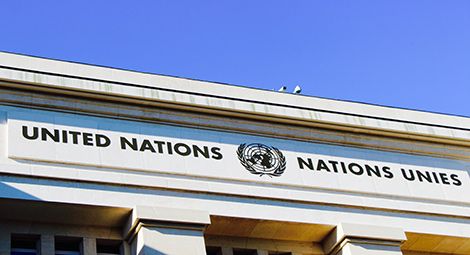
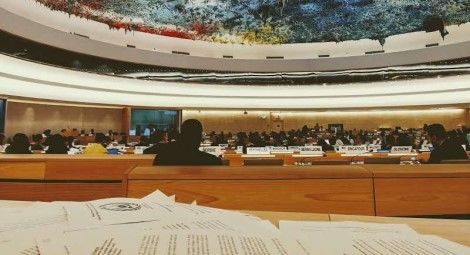
In January 2021 Nepal’s human rights record was reviewed at the United Nations Human Rights Council as part of the Universal Periodic Review (UPR) process. Prior to the review, CSW made a submission which highlighted concerns about the right to FoRB in the country. Several states made strong recommendations on FoRB during the review, including urging Nepal to amend Article 26 of the constitution (Netherlands) and sections 155, 156 and 158 of the Penal Code (Denmark). Nepal has until the 47th Session of the Human Rights Council to decide which recommendations it will accept or note, when the outcome is adopted by the Council.
Recommendations
To the government of Nepal:
- Take appropriate measures to amend Article 26(1) of the constitution and Sections 155, 156, 157 and 158 of the Penal Code, 2017, so that they are consistent with international standards on freedom of religion or belief.
- Take immediate measures to reformulate Article 26 of the constitution to remove the prejudicial character in the definition of secularism, and instead include a definition of secularism which is in conformity with international human rights framework and refrains from preferential treatment of one religion over others.
- Prosecute perpetrators of crimes who target religious minorities and ensure that police officers who fail to carry out their duties are liable for failure to investigate.
- Take measures to ensure that wrongful prosecutions are not encouraged and urge the judiciary to expedite hearings which have financial and reputational impacts on religious minorities who are the victims of state and non-state actors.
- Ensure that religious minorities have the right to own, maintain, protect and have access to sacred sites and burial grounds, and that suitable unused public land will be officially designated for burial, so that minority religions’ right to manifest their faith in their traditional ceremony of burial is officially upheld.
- Take lasting measures to ensure that Tibetans in the country are afforded the freedom to profess, practice and preserve their religion without fear or intimidation, harassment and attack, and to guarantee that Tibetans enjoy social, legal and mobility rights without fear of persecution.

 English (UK)
  Español de México
  简体中文
简体中文