
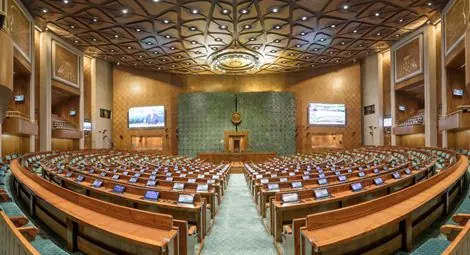
The government of India re-introduced the Foreign Contribution (Regulation) Amendment Bill, 2026, on 20 July, the first day of the second annual session of parliament, known as the monsoon session. The bill has prompted concern among religious organisations regarding its potential impact on freedom of religion or belief (FoRB) if it becomes law.
The bill proposes amendments to India’s Foreign Contribution (Regulation) Act (FCRA), 2010, stipulating that if an organisation’s FCRA registration expires, is cancelled, surrendered or is not renewed, a government-appointed designated authority would take control of assets that have been acquired using foreign funding. If the registration is not restored, those assets could be transferred to government departments or sold to the state. Although the bill states that places of worship must retain their religious character, they would still fall within this framework.
The bill also prohibits the use of foreign contributions for ‘proselytisation’ – a term left undefined which grants broad discretionary powers to local authorities.
Religious organisations and civil society claim that the proposed legislation could have serious implications for FoRB and FoRB-related work in India. Many religious organisations across India use foreign contributions to support schools, hospitals, hostels, disaster relief and other community services. Under the proposed amendments, organisations that lose their FCRA registration could also lose control of assets developed over many years. This has led to increasing uncertainty for institutions serving vulnerable communities.
On 17 July, before the monsoon session started, the Catholic Bishops Conference of India held a national day of prayer to call for united prayer and efforts amidst concerns over the bill.
On 23 July the opposition Congress Committee in Mizoram Pradesh State, where there is a Christian majority, held demonstrations and submitted memorandums, claiming the bill targets welfare infrastructure in the region.
On 24 July church leaders met with Mizoram Chief Minister Lalduhoma to discuss the potential impact of the bill on churches and Christian institutions. Following the meeting, Chief Minister Lalduhoma said the state government would convey these concerns to the central government.
CSW’s Founder President Mervyn Thomas said: ‘The proposed amendment to the FCRA is a deeply alarming escalation in the ongoing pressure on civil society and faith-based organisations in India that could even pave the way for the government to seize control of schools, hospitals and places of worship. Such administrative measures are deeply unjust and a severe violation of the right to freedom of religion or belief. We urge parliamentarians to heed the widespread concerns raised by civil society and religious leaders, and to reject legislation that would heavily penalise those working to serve the common good.’



 English (UK)
  Español de México
  简体中文
简体中文