
In April CSW published a statement on COVID-19, in which we warned that the pandemic could potentially put vulnerable religious communities at even greater risk. We called on governments around the world to ensure that their citizens’ right to freedom of religion or belief was upheld, despite the various restrictive measures that were necessary to prevent the disease from spreading. Unfortunately, our fears have been realised time and again, with marginalised faith groups across the globe being further victimised by the impact of the virus.
Distribution of aid
As you have no doubt seen on your daily news feeds and in our local communities, vulnerable groups across the world have become even more reliant on aid. One of our main concerns was that minority faith groups received equal access to basic assistance, but sadly this hasn’t always been the case.
Even prior to the pandemic, Cuba was experiencing chronic shortages of food, medicine and hygiene supplies. Churches which responded to their communities’ needs by distributing food and basic necessities, have had these confiscated. In India – the world’s largest lockdown, where thousands are in desperate need of support – Christians who have delivered aid have been falsely accused of conversion (anti- conversion laws are enforced in seven states), and some have even been detained by the police. Meanwhile, from Pakistan we’ve received reports of instances where food aid was denied to Hindus and Christians.
Religious groups vilified
If this weren’t enough, religious minorities in many parts of the world have been blamed for spreading COVID-19. A religious leader from an unregistered Protestant church in Cuba was placed in an overcrowded prison cell with ten other detainees on the grounds of ‘spreading disease’.
In India, Muslims were accused of spreading the coronavirus after a religious gathering of approximately 8,000 people in Delhi, which triggered nationwide panic and provoked abuse against Muslims and the boycott of Muslim businesses. On Pakistani social media COVID-19 has been referred to as the ‘Shi’a’ virus’, in an attempt to apportion blame for the disease on the Hazara Shi’a community, a group which has long been stigmatised.
The most vulnerable left behind
Back in April we stressed the importance of ensuring that those most vulnerable to contracting COVID-19 – those living in overcrowded conditions, with minimal or no access to healthcare – weren’t forgotten by the international community. Starvation looms in Eritrea, where the government has been forcibly collecting money from its citizens to fight the virus, but giving them no assistance. Moreover, the strictly enforced lockdown prevents people from taking food to family members in prison, even if they have food to spare. Eritrea has thousands of prisoners of conscience of all creeds.
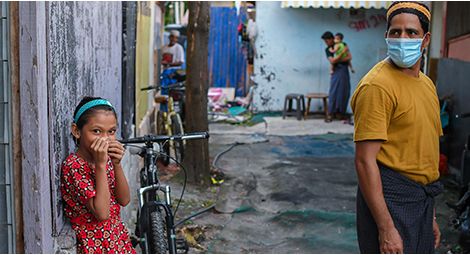
Many of you have already campaigned with us on behalf of religious minorities living in internally displaced persons camps in Burma, as well as the predominantly Muslim Uyghur population in Xinjiang, China, between one and three million of whom have been detained in ‘re- education’ camps.
Let’s continue to speak up for them, and for all whose faith puts them at even greater risk from the impact of COVID-19. The pandemic has changed many things, but one thing it will not change is our commitment to seek justice for marginalised faith groups around the world.
Act
For more on how we’re supporting vulnerable religious groups affected by the pandemic visit csw.org.uk/coronavirus
 English (UK)
  Español de México
  简体中文
简体中文