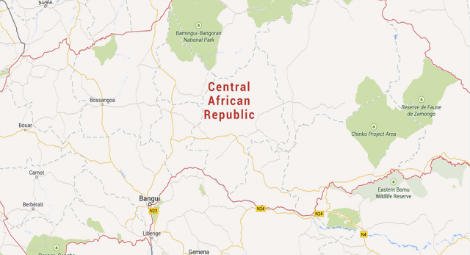
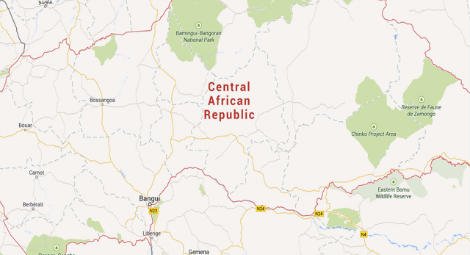
CSW is calling for the protection of members of the interreligious peace platform in the Central African Republic.
Christian Solidarity Worldwide (CSW) is calling for the protection of members of the interreligious peace platform in the Central African Republic (CAR), following reports that the chairman of the Evangelical Alliance was targeted in the recent outbreak of violence in the capital, Bangui.
During violent clashes which began on 26 September, the home of Reverend Nicolas Guerekoyame-Gbangou, chairman of the Evangelical Alliance, was looted and burned. Armed attackers arrived at the house specifically asking for the pastor who was away from his home at the time. His family was able to escape but two people seeking refuge in the premises were killed. The incident has raised questions regarding the lack of security at Reverend Guerekoyame-Gbangou’s home, given his prominent role in peace building and reconciliation between religious groups in the country.
According to local sources the clashes have claimed between 100 and 200 lives, with reports of corpses being dumped in water wells. The violence started after the body of a young Muslim man was found in Bangui, leading to retributive violence along sectarian lines with Muslims targeting Christians, and which subsequently descended into lawlessness with anti-Balaka groups establishing roadblocks in the capital and armed groups attacking peacekeeping forces. The Malimaka dispensary, St Michael Roman Catholic Church in the PK5 district and a police station in the 5th arrondissment were looted and burned, causing the local population to flee.
The situation in Bangui had been largely peaceful since October 2014 after the anti-Balaka took to the streets calling for the resignation of the president of the transitional government Catherine Samba Panza. The clashes are of particular concern given the upcoming national elections on 18 October, raising the possibility of further violence along sectarian lines. Furthermore, the elections are due to take place at a time when at least 30,000 people have been newly displaced.
CSW’s Chief Executive Mervyn Thomas said, “The eruption of violence less than a month ahead of national elections is a concerning development and an indication of the complexities of returning the country to civilian rule. Despite the efforts of the international peacekeeping forces and the transitional government, the country’s social fabric remains extremely weak and ethnic and religious tensions are still easily manipulated by armed groups. Whilst mindful of this, CSW calls on the peacekeeping forces and transitional government to ensure the protection of key religious leaders at the forefront of national reconciliation and peace building efforts, including the Catholic Archbishop, Chief Imam and Chairman of the Evangelical Alliance. CSW also calls for the swift and full disarmament and demobilisation of armed groups in the country and a reconsideration of the electoral timetable, to ensure free and fair elections in an atmosphere conducive to a peaceful transition to democratic rule.”
Notes to Editors:
- Click here to read CSW’s oral statement to the UN Human Rights Council on the situation in the Central African Republic.
- Seleka, a predominantly Muslim rebel coalition, took power in Central African Republic in a coup in March 2013, suspending the constitution, dissolving the government and National Assembly, and eventually installing one of its leaders, Michael Djotodia, as president. In September 2013, Djotodia officially disbanded Seleka; however many rebels refused to disarm and began sectarian. The sustained and severe human rights violations eventually resulted in retributive violence following the emergence of anti-Seleka groups commonly referred to as ‘anti–Balaka’ (anti-balle AK – against the bullets of the AK47), and largely composed of ex-Seleka members, vigilante villagers and former members of the national army. Although the anti-Balaka groups have been widely described as “Christian militia”, in reality they are composed of pre-existing village defence groups bolstered by former soldiers loyal to deposed President Bozize, former Seleka fighters, angry youths seeking revenge for Seleka violations, and common criminals.
- The National Interfaith Peace Platform was awarded the Sergio Vieira de Mello Award on World Humanitarian Day 19 August 2015, for the contribution to peace in the Central African Republic.

 English (UK)
  Español de México
  简体中文
简体中文