

In the two weeks before this piece was written, Premium Times reported gunmen killing eight Christian residents and four mobile police officers in Ayilamo, Benue State; separate attacks killed civilians in Kinat, Dungus, Vodni, and Aloghom, Plateau State; and at least 15 more died in an ambush in Jos South.
By early September, some advocacy organisations were citing over 3,000 Christians killed and more than 3,000 abducted since January — figures gathered from residents and survivors, not independently verified, but consistent with a sustained, documented pattern.
And by the end of this month, the roughly 200 United States troops deployed to Nigeria in February after Washington redesignated the nation a Country of Particular Concern (CPC) will have withdrawn. Whatever external pressure that deployment applied is leaving with it. What remains is whatever Nigeria’s own institutions choose to do.
Every time a community is attacked in northern Nigeria, the same conversation follows. Someone asks whether the law protects religious minorities. It does. The 1999 Constitution guarantees freedom of religion or belief in unambiguous terms, and prohibits discrimination on the basis of religion. Nobody who has read Chapter IV needs convincing that the guarantee exists on paper.
The problem lies elsewhere: in the gap between the law as written and the law as applied—by the officer at the police station, the state attorney deciding whether to press a case, and the ministry official deciding which IDP camp receives support this quarter. After nearly a decade of documenting FoRB violations across northern and north-central Nigeria, I have come to believe this is where the real crisis lies. Not in the statute book, but in the discretion of frontline officials, exercised the same way, case after case, in a direction that consistently disadvantages the communities the law is supposed to protect.
Three examples from CSW Nigeria’s (CSWN’s) casework illustrate this.
Security presence isn’t protection
On the night of 21–22 June 2026 gunmen attacked Kawel village in Bokkos LGA, Plateau State, killing 23 people, including the regional secretary of the Church of Christ in Nations (COCIN). Soldiers from Operation Enduring Peace were stationed about a mile away. They received distress calls while the attack was still underway. They arrived two hours after the attackers had already left.
This is not a story about absent security infrastructure. It is a story about a security presence that had the means to intervene and, in the moment, chose not to. That distinction matters because it determines where the fix has to be aimed. You cannot solve a decision problem by adding more patrol vehicles.
When the state itself trades away a prosecution
On 2 January 2026 the Katsina State Ministry of Justice wrote to the state’s Chief Judge, listing 48 people detained for banditry-related offences and 22 others already on trial, and requesting their release as a condition for continuing a peace accord with the armed groups responsible. The letter did not categorise the accused by the seriousness of their alleged offences. It treated ongoing prosecutions as something to be handed over in a negotiation the victims were never party to.
This is worth sitting with. We tend to talk about impunity as a failure of will or capacity: police too stretched to investigate, courts too slow to convict. Here, impunity was not what was left over after the system tried and failed. It was what the system produced on purpose, precisely when prosecuting would have cost politically.
Who gets left off the list
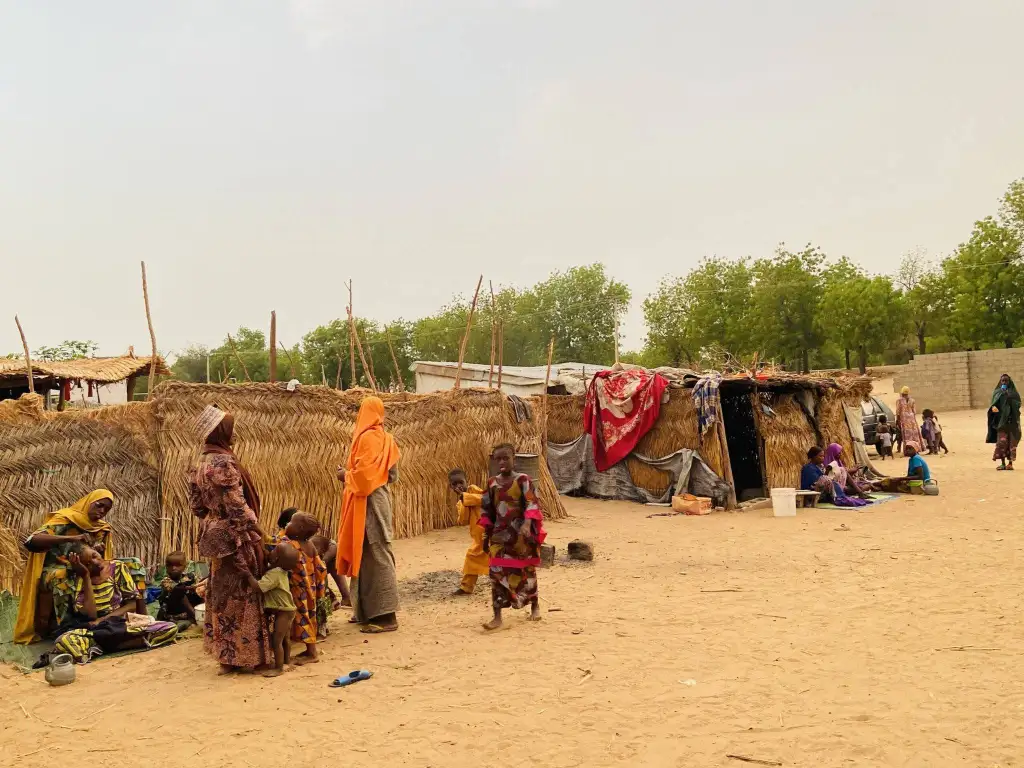
Since 2019 Christian internally displaced persons (IDPs) displaced from Gwoza LGA and sheltering in Maiduguri camps have received no direct assistance from the Borno State government, despite having registered their camps like everyone else. In December 2021 the state barred NGOs from distributing food and other aid to IDPs across Maiduguri — a policy framed as building self-reliance, which fell almost entirely on communities with no government channel to fall back on. In April 2025, one of these camps at Shagari Low Cost faced eviction for unpaid rent. CSWN paid the rent because the authority responsible for the camp did not.
None of this required a new discriminatory law. It required nothing more than the ordinary, unremarked exercise of administrative discretion, applied consistently in one direction year after year.
What these three cases share
None of these outcomes required an officer to be a bigot or a state actor to be corrupt. They required something more mundane and more durable: an institutional environment in which the informal cost of protecting a religious or ethnic minority — social friction, political awkwardness, the discomfort of confronting one’s own community — consistently outweighs the formal cost of not protecting them, because almost nobody is watching closely enough to make that second cost real.
That is not a call for despair. It is, if anything, a more useful diagnosis than ‘Nigeria doesn’t take freedom of religion or belief seriously’, because it points to something specific and fixable: the monitoring gap. When the probability that a bad decision gets reviewed and sanctioned is close to zero, discretion drifts toward whatever is socially easiest. Close that gap, and incentives shift.
Three things that would actually move the needle
- Make deployment and prosecution decisions reviewable. A documented, time-stamped record of when a distress call was received and when a response was deployed, reviewed by someone outside the local command, would turn ‘we came as fast as we could’ into a claim that can be verified.
- Bring prosecutorial withdrawal out of the shadows. Any decision to discontinue a prosecution for reasons connected to a peace negotiation, an amnesty, or a security accommodation should require a published, reasoned justification, not a quiet letter between two offices.
- Audit resource allocation to IDP camps and disaster response by religious composition, the way we already audit it by state and by LGA. If a camp with equivalent needs is receiving materially different support, that should be visible before it becomes a five-year pattern, not after.
None of this is a demand for new legislation. Nigeria’s constitutional guarantees are already strong enough to build on. What is missing is the machinery that would make those guarantees meaningful at the point where a citizen actually meets the state — at the police station, in the courtroom, at the camp gate.
Until that machinery exists, the gap between what the law promises and what officials deliver will continue to be filled, case by case, by the same pattern: protection deferred until it is too late to matter. With the American deployment gone by the end of this month, that machinery will not be built by anyone else.
By Matthew Folorunsho Braimoh, Barrister-at-Law and Director of Advocacy, Research and Training at CSWN, based in Kaduna.
 English (UK)
  Español de México
  简体中文
简体中文