


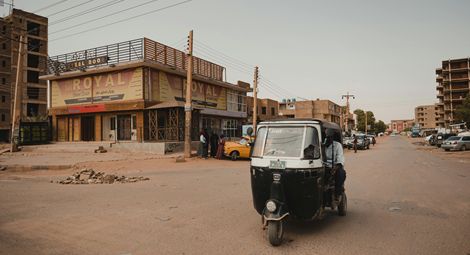
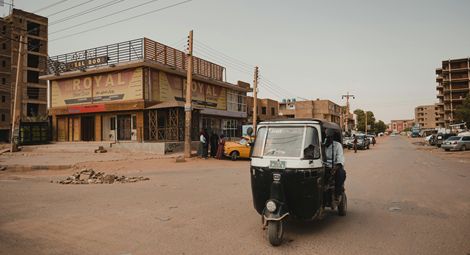
The conflict between the Sudan Armed Forces (SAF), headed by General Abdel Fattah al Burhan, and the Rapid Support Forces (RSF, formerly the Janjaweed militia) led by his former deputy Mohamed Hamdan Dagalo, also known as Hemedti, who jointly mounted a coup against the transitional government in October 2021, has been ongoing for over two years. The hostilities began on 15 April 2023, as both parties were due to merge in line with an internationally supported framework agreement on a transition to democracy.
Legal framework
Sudan is party to the International Covenant on Civil and Political Rights (ICCPR). The 2005 Interim National Constitution, enacted prior to the secession of South Sudan, provided for freedom of religion or belief (FoRB) and referred to shari’a ‘and the consensus of the people’ as the sources of nationally enacted legislation in northern states.
Under the civilian-led transitional government, established following the removal of former president Omar al-Bashir in April 2019, there were some improvements in FoRB, including a constitutional declaration signed in August 2019 which included several provisions protecting the right to freedom of religious belief and worship ‘in accordance with the requirements of the law and public order.’ The constitutional declaration also affirmed Sudan as an ‘independent, sovereign, democratic, parliamentary, pluralist, decentralized state, where rights and duties are based on citizenship without discrimination due to race, religion,’ making no reference to religion as a foundation of the state.
Laws promulgated under the former constitution remained in effect while the transitional government worked on reforms to Sudan’s legal framework in line with the constitutional declaration. Amendments included the decriminalisation of apostasy in 2020, the removal of flogging as a punishment for blasphemy, and rules allowing non-Muslims to drink, import and sell alcohol.
Conflict between the SAF and the RSF
Sudan’s civilians continue to bear the brunt of violence ‘marked by an insidious disregard for human life,’ with at least 150,000 people having been killed.
In residential areas, civilians remain in grave danger due to aerial bombardment and home invasions by armed men seeking to use rooftops as vantage points, and who also loot extensively. Severe violations have been reported in cities in Central, North, South and West Darfur, Khartoum, Northern State, and North Kordofan State, including sexual violence against women and girls, the forcible recruitment of civilians, including children, and arrests and false accusations targeting volunteers from Resistance Committees, who maintain a neutral stance while organising logistical support for medical services for all who are injured.
Consistent reports of medical facilities being targeted by both warring parties, described by the World Health Organization (WHO) as ‘a flagrant violation of international humanitarian law’, of attacks on medical personnel, and of shortages of food, water and essential medications are equally concerning. The human toll of the conflict has disproportionately impacted civilians; to date over 12 million are internally displaced and over three million have fled the country. The perilously insecure situation of civilians was exacerbated by the releasing of detainees from five prisons, including several wanted by the International Criminal Court.
The conflict has extended across the whole of Sudan, with tensions flaring in Khartoum and Omdurman as the SAF attempt to regain control of neighbourhoods taken by the RSF. It has also affected parts of South Kordofan and Gezira state. In March 2024 the SAF dropped four bombs on El Hadra village in the Nuba Mountains which fell on the primary school killing 14 people, most of them children, and causing the displacement of over 100 civilians. In Gezira, where the RSF control large parts of the state, over 100 people were killed in what has been described as an RSF massacre in Wad-al-Noor village. The RSF has expanded its military operations in Gezira State, which is currently home to thousands of people who were displaced internally by the ongoing conflict. As in other states occupied by the RSF, there have been reports of serious human rights violations, including the killing of civilians, attacks on hospitals, and the looting of homes.
In March 2025 the SAF claimed victory by expelling the RSF from most of Khartoum, including the key locations of the Presidential Palace and Khartoum International Airport. Videos circulating on social media reportedly showed RSF fighters leaving the city without being attacked. Clean-up operations have begun in the capital, including assessing the damage and attempting to make the city safe for the return of civilians. However, fighting has intensified in the nation’s second city, Omdurman, with reports the RSF is targeting civilians and interfering with hospital operations in areas under its control. In May 2025 the SAF declared the capital ‘completely liberated’ from the RSF. The RSF has also been drone attacking civilians and military objects in many states, including Khartoum and Port Sudan, the de facto capital.
In February the RSF announced plans to form a parallel government during a summit hosted in Nairobi that included the RSF leader Hemedti, who is under US Sanctions. The leader of the Sudan People’s Liberation Movement – North, Abdul Aziz al Hilu, was also present and announced his group’s allegiance with the RSF. The two areas of South Kordofan and Blue Nile have largely remained out of the conflict. However, since the declaration, the conflict has deepened and widened geographically and has exacerbated the targeting of individuals and communities based on their ethnicity and or place of origin across Sudan.
On 16 April the RSF announced its parallel government to coincide with a global conference on Sudan held in London. The announcement came days after the RSF overran Zamzam displacement camp amid the continued siege of El Fasher in violation of a UN Security Council resolution. Zamzam and Abu Souk IDP camps comprise the largest displacement camps in Sudan, and the attacks have caused further displacement for at least 400,000 people. During the attacks, the RSF targeted civilians, killing women and children and healthcare workers in the only operating clinic in Zamzam camp.
In its first written report the UN Fact-Finding Mission on Sudan (FFM) concluded that war crimes and possible crimes against humanity are being committed during the current conflict. The extension of the FFM’s mandate in September by the Human Rights Council (HRC) will ensure that further evidence can be gathered, analysed and safeguarded for prosecutions in the future.
Situation of freedom of religion or belief (FoRB)
Places of worship have also been targeted during the current conflict in violation of International Humanitarian Law. While both mosques and churches have been attacked, CSW sources report that there appear to be efforts by both sides to avoid attacks on mosques even when operationally sensitive. However, churches have been deliberately attacked or used during military offensives.
These attacks are consistent with actions taken by leaders of both the SAF and RSF during the period following their joint coup in October 2021, which was marked by the clawing back of limited democratic gains, the return to prominence of Islamists from the Bashir era, an emboldening of extremist non-state actors amid growing impunity, and repression and violations of FoRB across the country, including harassment, arrests and prosecutions of converts despite apostasy no longer being a crime under the law, and seizures and demolitions of church owned properties.
There have also been reports of the arrest and detention by the SAF of Christians who have fled from RSF controlled areas. In October over 100 Christians from the Sudanese Church of Christ (SCOC) fled Al Ezba, Khartoum, due to rising insecurity in the area and travelled to Shendi in River Nile State, where 26 men were arrested by the Military Intelligence Unit and accused of being affiliated with the RSF. In RSF controlled areas Christians report being forcibly converted, or detained if they attempt to flee.
Places of worship continue to be attacked across the country in areas controlled by both parties to the conflict where fighting is intense. In the latter months of the siege on El Fasher, between June and September 2025 specifically, several such attacks were reported, including an attack on a mosque which killed at least 70 people on 19 September.
For further information on attacks on places of worship over the course of the conflict, please see CSW’s briefing on this issue specifically.
El Fasher, Darfur
Over the course of 18 months, El Fasher, the capital of North Darfur State, became the main battle ground between the RSF and the SAF in the state, as it was the only city that was not under RSF control. The RSF siege of the city began in April 2024, and continued despite a United Nations Security Council (UNSC) resolution calling for it to be lifted. In April 2025 the RSF seized the Abu Souk and Zamzam camps for internally displaced persons (IDPs), located approximately 15km from the city. The two camps formed the largest IDP settlement in Sudan, housing over 700,000 people between them. Both camps have been turned into RSF military bases.
Fighting intensified from June, with further attacks on civilians. Between June and September, CSW reported on an intensive bombing campaign by the RSF that targeted civilian infrastructure including places of worship. Reports also emerged of the RSF using places of worship including churches for military purposes. In August the UN Human Rights Office monitoring Darfur warned that there were no safe exit routes in or out of the city. Civilians were left with the choice of leaving and risking sexual violence, execution or abduction, or remaining in the city and suffering bombardments, starvation and potential atrocities if the RSF overran the city. In October CSW joined over 100 organisations and individuals calling for action to ensure the safety of civilians when it became clear that the RSF had blocked exits from the city.
On 26 October the RSF declared that they had captured an SAF military outpost in El Fasher. Two days later, on 28 October, General Burhan confirmed that SAF forces had withdrawn from the city. In the hours that followed the RSF’s announcement that they had taken El Fasher, communications networks to the city were restricted, with Sudanese across the country and in the diaspora reporting they were unable to reach loved ones still trapped there. In the first 24 hours following the capture of the city, videos, audio files and photos detailing grave human rights violations committed by the RSF against civilians began to emerge. Images of summary executions, bodies of civilians in what appear to be mass graves, and audio files of RSF fighters targeting women and girls have been shared online. There is also growing evidence that the RSF is targeting individuals who stayed to support civilians in El Fasher during the siege with food and medical assistance.
Gezira State
The RSF attacked villages in Gezira state following the defection of one of its commanders, Abu Aqla Kikal, to the SAF on 20 October 2024. On 25 October at least 124 people were killed in an attack that led to thousands being forcibly displaced. Disturbing reports also circulated suggesting that several women had committed mass suicide in the wake of the RSF attacks to avoid being subjected to sexual violence, sexual slavery or kidnapping by the armed group. There are also reports of the RSF separating men in the community and detaining some in a local mosque, while others were marched into fields and killed.
Targeting of civil society actors
The RSF is also implicated in the targeting of civil society actors, including the killing of journalist Muawiya Abdel Razek and three members of his family on 4 June 2024 in Khartoum. The journalist had previously been detained by the paramilitary group. In addition to the violations experienced during the fighting, civilians living in areas controlled by both parties are subjected to arbitrary detention and harassment. Members of resistance committees, journalists, lawyers, and opposition politicians are particularly likely to experience arbitrary detention, monitoring or targeting.
Conflict-related sexual violence (CRSV)
Distressing reports have emerged from areas seized by the RSF in Khartoum and Omdurman of rape, gang rape, and forced ‘marriages’ as its forces advanced through neighbourhoods, with the majority of these violations occurring in victims’ homes. Initially Ethiopian and Eritrean female refugees in Khartoum were targeted, while Sudanese women were spared. However, they soon began to suffer similar atrocities.
Human Rights Watch (HRW) has reported cases involving gang rape of girls as young as nine, and of older women, including a sixty-year-old in Khartoum North who was raped alongside her daughter and granddaughter. Women and girls have also been raped in front of male family members.
The Strategic Initiative for Women in the Horn of Africa (SIHA) documented similar violations by the RSF after they took control of Gezira State in December 2023, with women and girls being abducted from their homes, held for several days in various locations and raped repeatedly by multiple perpetrators.
While there are fewer documented accounts detailing CRSV by the SAF, this is possibly due to reluctance, stigma or pressure from family members and others to keep silent for fear of reprisals from the military, which constitutes the de facto state authority. However, accounts have emerged from SAF-controlled areas of soldiers abusing their positions to violate vulnerable women. For example, over two dozen women who are unable to leave Omdurman city have reported being forced into transactional sex with SAF soldiers to receive humanitarian aid, or access to abandoned properties where they forage for items to sell to feed their families.
In Darfur, where the office of the ICC Prosecutor asserts credible evidence exists of a recurrence of atrocity crimes targeting the ethnically African Fur, Zaghawa and Masalit tribes, chilling evidence is emerging of rape once again being used as a weapon of war. Following the fall of Geneina in West Darfur State to the RSF in November 2023, women reported ethnicity-based rape and sexual abuse by RSF fighters and their allied Arab militias. Many victims were from the Masalit community. However, women from Arab tribes were also targeted if they were married to Masalit men or had children with them.
In areas controlled by the RSF, women and girls are not only subjected to sexual violence but are often abducted and held for extended periods of time. A 23-year-old woman from North Kordofan state was abducted by an RSF fighter, taken to his home in Kas, South Darfur, eventually escaped, but returned home pregnant. A woman from Omdurman who was kidnapped by the RSF along with her three young children was subjected to sexual violence for six months, and was later informed her children would be killed unless she became a spy. She was eventually sent to an SAF-controlled area, was caught, and is now in a protection centre, haunted by fears for her children, who are still held by the RSF.
Other women forced to work with the RSF who return to SAF-controlled areas or are captured by the SAF also face prosecution, and in some cases have been sentenced to death following unsound judicial rulings which fail to consider the trauma and coercion they have endured, and thereby compound the injustices experienced by survivors.
In addition, the targeting of hospitals, schools and medical staff has exacerbated the physical and mental anguish of survivors of CRSV. The consequent lack of access to specialist treatment and psychosocial assistance heightens the suffering of deeply traumatised victims, causing some to commit suicide.
Ongoing international scrutiny
In October 2025 the UN Human Rights Council (HRC) voted in favour of extending the mandate of the Fact-Finding Mission on Sudan for another year. In November, following the fall of El Fasher, the HRC held a special session in which they passed a consensus resolution calling on the FFM to conduct an urgent inquiry into the breaches of international law in and around El Fasher.
CSW continues to urge enhanced scrutiny of the situation of Sudanese citizens, particularly women and girls amid rising CRSV, refugees and other vulnerable groups, and to highlight the importance of ensuring that perpetrators of violations targeting civilians or civilian objects are left in no doubt they will be held to account.
The international community must remain engaged, and all efforts to broker peace must include a broad and significant civil society component, since the creation of an inclusive Sudan remains a guiding principle of the civilian movement. This is the only way to secure a durable solution based on an inclusive Sudanese identity, rule of law, human rights and, most importantly, accountability. Any rush to restore a semblance of stability at the expense of justice and accountability for the grave violations committed since 2019 will ultimately prove unsustainable. Addressing impunity and holding those responsible for gross violations is an integral part of peace and stability. This accountability must also extend to other countries that have supported the parties to the conflict, including by supplying arms and facilitating trade.
Recommendations
To the United Nations and Member States:
- Continue to urge both parties to the conflict to agree and adhere to an immediate and unconditional ceasefire, and to cooperate fully with the UN Fact-Finding Mission on Sudan and other UN mechanisms.
- Support the Designated Expert and OHCHR in their reporting on Sudan, as well as the mandate of the UN Fact Finding Mission on Sudan, ensuring it is fully resourced and equipped to fulfil its mandate.
- Condemn all attacks on civilians and the targeting of human rights defenders, medical personnel, humanitarian and religious workers, hospitals and places of worship as gross violations of international human rights and humanitarian law which may border on war crimes, and which will not go unpunished.
- Support investigations into war crimes and crimes against humanity, and advocate for prosecutions through the ICC and universal jurisdiction
- Facilitate broad and significant civil society participation in negotiations on a peaceful democratic transition. This is the only way to secure a lasting political solution based on an inclusive Sudanese identity, rule of law, human rights and accountability.
- Call on all parties to the conflict to ensure the safety and non-refoulement of refugees, who now find themselves in exceptionally difficult circumstances, unable to stay safely in Sudan, yet unable to return to their home country due to well-founded fears of persecution.
- Work to facilitate humanitarian access to enable supplies of food, water, medical and other essentials to reach those in need, and to allow for the evacuation of those needing or desiring evacuation from severely affected areas.
- Respond to people fleeing the violence in accordance with the stipulations of the UN Refugee Conventions, encouraging neighbouring states to respect the African Refugee Convention and embrace the spirit of Pan-Africanism with regard to protection, provision and non-refoulement, and to seek additional assistance from the Office of the High Commissioner for Refugees (UNHCR), Red Crescent or Red Cross if needed.
- Advocate for the imposition of a comprehensive arms embargo on parties to the conflict, and for sanctions for countries which continue supplying arms.
To the European Union and Member States:
- In keeping with the European Parliament’s resolution of 13 March 2025, widen targeted sanctions on those responsible for atrocities, including the designations of General Abdel Fattah al Burhan and Mohamed Hamdan Dagalo. Urge for a comprehensive arms embargo covering all parties to the conflict, and for further sanctions for countries which continue supplying arms.
- Urge both the Sudan Armed Forces and the Rapid Support Forces to agree to an immediate ceasefire and engage in inclusive peace negotiations. Support international effort in this direction.
- Support investigations into war crimes and crimes against humanity, and advocate for prosecutions through the UN, ICC and universal jurisdiction. Redouble support for other existing accountability mechanisms including the UN FFM and the African Commission on Human and People’s Rights FFM.
- Strongly condemn attacks on civilians, and advocate for the protection of human rights defenders and wider civil society.
- Call for the immediate cessation of CRSV, and ensure survivors receive necessary support and access to justice.
- Highlight and condemn attacks on houses of worship as violations of international humanitarian law and urge an end to their misuse as military bases.
To the government of the United Kingdom:
- Urge both the Sudan Armed Forces and the Rapid Support Forces to agree to an immediate ceasefire and engage in inclusive peace negotiations.
- Support investigations into war crimes and crimes against humanity, and advocate for prosecutions through the UN, ICC and universal jurisdiction.
- Strongly condemn attacks on civilians, and advocate for the protection of human rights defenders and wider civil society.
- Call for the immediate cessation of CRSV, and ensure survivors receive necessary support and access to justice.
- Advocate for and initiate targeted sanctions on those responsible for atrocities, including military leaders, for a comprehensive arms embargo covering all parties to the conflict, and for further sanctions for countries which continue supplying arms.
- Highlight and condemn attacks on houses of worship as violations of international humanitarian law and urge an end to their misuse as military bases.
To the government of the United States:
- The State Department and the US Commission on International Religious Freedom (USCIRF) should continue to monitor FoRB in Sudan and designate it a Country of Particular Concern (CPC).
- The Ambassador-at-Large for International Religious Freedom, and USCIRF should request an invitation to visit Sudan with unhindered access to all parts of the country.
- Deny US travel visas to Sudanese military and government officials directly responsible for FoRB violations.
- Maintain targeted sanctions on General Abdel Fattah al Burhan and Mohamed Hamdan Dagalo, and expand them to include other individuals or entities that engaged in severe human rights violations and abuses, including of FoRB, during the post-coup period.
- Designate the Al-Bara bin Malik Brigade and other Islamist militias affiliated with the Sudan Armed Forces as Entities of Particular Concern.
- The State Department should continue to engage through embassies and missions with leaders of religious and belief communities within Sudan, as well as those who have been displaced into neighbouring countries, to inform its annual report on religious freedom in the country.
Download this briefing as a PDF with arena-specific recommendations: EU | UK | UN | US
 English (UK)
  Español de México
  简体中文
简体中文