

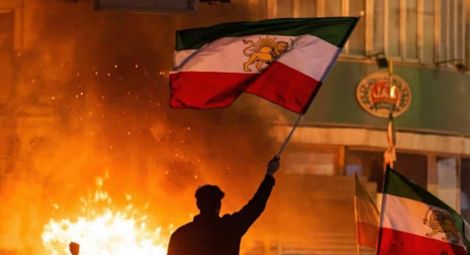
The United Nations Human Rights Council (UNHRC) passed a resolution renewing the mandate of the Independent International Fact-Finding Mission on Iran for two years, and the mandate of the Special Rapporteur on Iran for one year during a special session convened on 23 January, as news continues to emerge of the government’s lethal response to widespread protests which began on 28 December 2025.
In response to the nationwide protests the Iranian government launched what the chair of the Fact-Finding Mission has described as possibly the deadliest crackdown since the 1979 Revolution. According to civil society activists, well over 5,000 unarmed protesters have been killed, with many casualties reportedly shot in the chest or head at close range or from rooftops, and some 16,700 have been arrested in towns and cities across Iran since the demonstrations began, including children.
Iran’s recently declared decision to lift the digital blackout that had been in place since 8 January allowed further information to emerge despite continuing disruption, including a tearful voice note from an unidentified woman pleading for Iranians abroad to continue protesting in large numbers on behalf of those at home, because continued protests inside the country amounted to suicide, as people were shot whether or not they were protesting, and many young lives had been lost.
Many people remain missing. A source informed CSW: ‘One of our church members was hit several times with pellets during protests, we are still trying to locate him. We are extremely concerned about the increased level of violence against civilian protesters. We fear that without serious pressure from the international community, the Iranian regime will continue to use such extreme force.’
In addition to renewing the mandates of the special procedures, the HRC resolution, which passed with a vote of 25 in favour, seven against and 14 abstentions, calls for the Fact-Finding Mission to conduct an urgent investigation into violations and abuses committed during and since the repression of the protests, which were triggered by severe economic hardship, and in which Iranians of every ethnicity, religion and belief participated.
During the 23 January special session, the UN High Commissioner for Human Rights highlighted that ‘video evidence appears to show hundreds of bodies in morgues, with fatal injuries to the head and chest… We have indications that the security forces made mass arrests in several cities, even pursuing injured people into hospitals, and detaining lawyers, human rights defenders, activists, and ordinary civilians.’
The Iranian authorities, who insist there were 3,000 fatalities, including members of the security forces, have not only described protesters as terrorists; they are also alleged to be demanding money from families and/or the signing of false documents stating that their relatives were members of the Basij paramilitary force of the Islamic Revolutionary Guard Corps (IRGC), in order for their bodies to be released to them for burial.
For example, on 9 January Christian convert Moshen Rashidi, a husband and father of three, was shot from behind while attempting to retrieve the body of his close friend Shahram Maghsoudlou, a power-lifting champion who had been targeted and killed by security forces during protests in Baharestan, Isfahan Province.
Mr Rashidi was carried to hospital by protesters, but died after being denied entry by government agents stationed outside it. His family searched for him for five days, and was only informed of his death after paying for his name to be searched for among the list of victims. His relatives were ordered to sign a form stating falsely that he was a member of Basij paramilitary group who had been killed by protesters. They refused, and his body was only returned after the family paid one billion Tomans (approximately USD 8,000). In addition, the authorities did not allow them to hold a funeral for him, nor to erect a gravestone to mark his burial site.
CSW’s Founder President Mervyn Thomas said: ‘CSW applauds the passing of this important resolution, and strongly condemns the appalling violence meted out against unarmed protesters across Iran since 28 December 2025. We concur with the High Commissioner’s assessment that ‘longstanding impunity for past human rights violations is fuelling grievance and tension’ and urge the Iranian authorities to release every individual who is detained arbitrarily, undertake judicial reforms, including ending the use of revolutionary courts, and ensure accountability for past and recent violations and abuses. The resolution is merely a start; the international community must continue to stand with the Iranian people until their demand for freedom, justice and respect for their human rights and dignity is met.’
 English (UK)
  Español de México
  简体中文
简体中文