




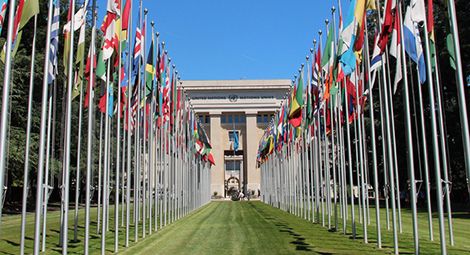
CSW welcomes the passing of a resolution on 6 July renewing the mandate of the special rapporteur on the situation of human rights in Eritrea by the United Nations (UN) Human Rights Council (HRC). The renewal came amid the passage of important resolutions on the situation of Rohingya Muslims and other minorities in Myanmar, and the situation in and around El Obeid in North Kordofan, Sudan.
The Eritrea resolution passed after a vote was called by China’s delegation, which spoke in support of Eritrea, alongside Cuba, Egypt and Indonesia. It passed with 23 votes in favour, six against and 17 abstentions. The majority of African, Asian and Organisation of Islamic Cooperation (OIC) countries were among the abstentions.
The renewal followed a month of intense lobbying by Eritrea’s ambassador to the UN in New York, Her Excellency Sophia Tesfamariam, who was sent to Geneva for the HRC’s 62nd session to lead the country’s efforts to terminate the special rapporteur’s mandate.
In the 14 years in which the mandate has existed, Eritrea has failed to engage with successive special rapporteurs, or to implement their recommendations. Yet prior to the vote, Ambassador Tesfamariam insisted that if the resolution passed, ‘Eritrea would no longer engage with the Council on this mandate,’ and would ‘disengage from this annual exercise.’
In her statements during the final interactive dialogue with the outgoing special rapporteur, Dr Mohamed Abdelsalam Babiker, on 15 June, Ambassador Tesfamariam had dismissed the 2016 report of the UN Commission of Inquiry on Eritrea that had found ‘reasonable grounds to believe’ that crimes against humanity had been underway in the country since 1991, claiming the Commission and its recommendations had ‘ended.’
In reality, the government of Eritrea continues to violate the rights of citizens comprehensively, and, as asserted in the special rapporteur’s final report to the Council, the international crimes identified in the Commission’s final report persist ten years later.
During the interactive dialogue Dr Babiker had highlighted that ‘ongoing systematic and widespread disappearance and prolonged incommunicado detention without charge or trial, torture and the persecution of political opponents, journalists and members of religious communities remain features of governance in Eritrea.’ He added that ‘the persistent and intentional use of these heinous practices, coupled with a systematic refusal to acknowledge the fate or whereabouts of detainees and missing persons, strongly indicates that these practices are not isolated incidents; rather they constitute a broader state sponsored policy of state repression and coercion.’He also urged that ‘the resilience and bravery of the Eritrean people should not be met with indifference.’
CSW’s UN Officer Claire Denman said: ‘CSW welcomes the renewal of the mandate, which will ensure continued scrutiny of the Eritrean government’s grave and extensive human rights violations, including the ongoing atrocity crimes identified in the 2016 report by the Commission of Inquiry, which the special rapporteur has found reasonable grounds to believe have continued unabated. We commend the outgoing rapporteur for consistently centring the voices of victims and survivors, and call on the Human Rights Council to ensure that his successor receives swift and strong support wherever requested.’
The HRC passed two other key resolutions on 6 July. Following an urgent debate on 3 July on the human rights situation in and around El Obeid in North Kordofan, Sudan, the HRC adopted by consensus a resolution expressing grave concern at escalating violence, attacks on civilians, the threat of atrocity crimes, the risk of conflict-related sexual violence and severe restrictions on humanitarian access. However, the resolution, which requests that the Fact-Finding Mission for the Sudan conducts an urgent inquiry and reports its findings to the HRC and General Assembly, fell short of naming external actors and entities complicit in the conflict.
The Council also adopted a resolution by consensus on the situation of human rights of Rohingya Muslims and other minorities in Myanmar, continuing important monitoring and reporting work alongside that of other existing human rights mechanisms, such as the special rapporteur and independent investigative mechanism for Myanmar.
Claire Denman added: ‘We also welcome the adoption by consensus of the resolutions on Sudan and Myanmar. The mechanisms of the HRC play a critical role in establishing facts and preserving evidence for future accountability. At a time when civilians continue to experience grave violations, these decisions underscore the Council’s commitment to ensuring these crimes are neither ignored nor forgotten.’
Notes to Editors:
- Credible reports indicate that more than 10,000 people continue to be held arbitrarily in over 300 detention sites across Eritrea, enduring inhumane conditions, including shortages of food, potable water and medical care, while torture and other cruel, inhuman and degrading treatment occur routinely.
- Several arbitrarily detained individuals were released in late 2025, including around 200 evangelical Christians. However, prior to their releases, most were made to sign documents renouncing their denominational affiliations, and assuming responsibility for any punishment that would ensue if they renege, compounding pre-existing severe curtailments of their right to the freedoms of religion or belief, assembly and association.
- Two Muslim religious leaders arrested arbitrarily in July 2025 as the government continues to shut down Muslim educational institutions, remain detained.
 English (UK)
  Español de México
  简体中文
简体中文